RevWar Romance: Turncoat + Quaker = Badass Couple

THE TURNCOAT, by Donna Thorland

A suspenseful Revolutionary War spy romance set against a finely textured backdrop of intrigue and decadence in British-occupied Philadelphia

For the British: Peter Tremayne, titled, well-connected officer who’s too principled for a career leading a ruthless army of occupation, too honorable for his own good, and too much in love to turn in the woman he knows played a role in his disgrace and is spying for Washington.

For the Americans: Kate Grey, serious, smart Quaker whose tactical genius and boldly calculated courage are roused by Major Tremayne along with her first taste of true desire.

The Turncoat (Renegades of the Revolution, #1)

Brought to you by: Donna Thorland, in The Turncoat (Renegades of the Revolution #1), 2013: Penguin/New American Library.

From the publisher (jacket copy):

They are lovers on opposite sides of a brutal war, with everything at stake and no possibility of retreat. They can trust no one—especially not each other.

Major Lord Peter Tremayne is the last man rebel bluestocking Kate Grey should fall in love with, but when the handsome British viscount commandeers her home, Kate throws caution to the wind and responds to his seduction. She is on the verge of surrender when a spy in her own household seizes the opportunity to steal the military dispatches Tremayne carries, ensuring his disgrace—and implicating Kate in high treason. Painfully awakened to the risks of war, Kate determines to put duty ahead of desire, and offers General Washington her services as an undercover agent in the City of Brotherly Love.

Months later, having narrowly escaped court martial and hanging, Tremayne returns to decadent, British-occupied Philadelphia with no stomach for his current assignment—to capture the woman he believes betrayed him. Nor does he relish the glittering entertainments being held for General Howe’s idle officers. Worse, the glamorous woman in the midst of this social whirl, the fiancée of his own dissolute cousin, is none other than Kate Grey herself. And so begins their dangerous dance, between passion and patriotism, between certain death and the promise of a brave new future together.

Real History AND Romance, again!

Lucky me – two books in a row that offer meticulous and atmospheric colonial history along with a breathtaking and believable romance. Like The Traitor’s Wife, which I reviewed for my previous post, The Turncoat falls on the “cusp” of the romance genre, where it blends seamlessly into historical fiction, and has been published in trade softcover format. But as with many a traditional histrom from Avon or HQN, the bosom&bodice cover image and allusion to a “Renegades” series tell a romance reader what to expect. This is certainly a romance novel. And what a romance novel! I loved it.

Here’s why:

Great hero. Peter is above reproach in many ways that matter; he deplores the inhumanity of the occupying force along with the particular depravity of certain notorious officers. Yet he’s subtle and nuanced – he’s not holier-than-thou and he’s not above using Kate’s attraction to him against her, from their first private encounter to his discovery of her masquerade as a wealthy Loyalist socialite in close proximity to the most deadly senior officers. He’s not an alpha, but he’s a survivor; he has a tortured family history and has twice disgraced his service to the Crown due to an innate sympathy for the victims of his army’s imperial occupation. He’s focused, strong, elegant and tenacious, but not one of those larger-than-life heroes who take up all the space in the book. Which is good, because….

Even greater, Jane-ish heroine. Like my beloved Jane Eyre, Kate is stronger than she knows, smarter than most of the people she encounters, unremittingly sure of her principles, and able to make painful sacrifices in order to act according to her moral compass. Her selfhood is never in question, even when she is brought painfully low it’s clear she’s choosing aspects of her abjection as a form of atonement.  And never at any time does it come across as “feisty” or “spunky” or TSTL-foolhardy, like some heroines who dash around madly and adorably doing the right thing and saving the day. This is a beautiful portrait of an unworldly young woman who becomes very worldly very fast. She falters, she doubts, she questions her own motives and inconvenient desires, but her strongly pragmatic idealism survives.

Non-icky “deflowering” scene that supports character development. (possible spoiler alert) Yes, Kate is a virgin and yes, Peter is an accomplished lover who senses her “awakening desire.” Blah blah. But Thorland deftly steers clear of the potential pitfalls with this trope. For one thing, I think it’s daring to put her heroine in the hands, literally, of another man, not the hero, for her first overtly sexual experience — this is an uncomfortable yet revealing scene where Kate, wearing her alluring assumed identity, has her first climax with her faux fiance, the curious villain of the novel, and Peter’s look-alike cousin, sadist Bayard Caide. I know, this all sounds convoluted, but it really works to throw the coupling of Kate/Peter into high relief, while exposing layers of nuance and complexity when we read Kate through her alternate identity in the Lydia/Bay scenes.

When Peter and Kate spend the night together the actual un-flowering (why isn’t there a better one-word term for this than the supremely silly “deflowering”??) scene is blessedly unflowery, and unsentimental.  Nor is it bizarrely implausible (worst for me is when these scenes are overly swoon-y and the heroine is suddenly discovered to be a “natural” sex goddess). This is one of the best scenes in the book for allowing the reader to see Peter and Kate as a man and a woman in love, in conversation, and in intimacy, without the burden of false identities or imminent danger. It’s emotionally satisfying. It’s also prosaic yet sexy and compelling.

Fresh look at fascinating history. Here is where l disclose that I have a tweep-ish acquaintance with the author, and we have twitter-chatted briefly about the history in this book, my fangirl appreciation for it, and a shared interest in local historic sites and museums. I have read numerous other fictional treatments of this period and the role of women in Revolutionary War espionage, many also incorporating the legendary figures of Benedict Arnold, Peggy Shippen, and Major John Andre.

As I read The Turncoat I thought a lot about the sentimental turn-of-the-century Janice Meredith, by Paul Leicester Ford (1899), which I read as a teen, and Shadow Patriots by Lucia St. Clair Robson (2005), both of which present Andre as a heroic figure on the wrong side of history. And there are dozens of other novels which do the same. But this is the first I’ve read which offers a darker, less sympathetic portrayal of the dashing, artistic Major Andre. Thorland effectively uses her knowledge of social history and material culture to create a plausibly creepier and more human version of the notorious spy hanged by Washington.

And her background as a curator of historic houses also lends varied textures to the novel’s architectural and domestic settings and deepens the impact of the events that happen therein.

Here are some of Kate’s thoughts on the first night she spends with Peter:

She’d realized in the first few weeks of her adventure in Philadelphia that no matter what the outcome of the war, she had transgressed. There would be no place in polite society, neither the learned salons of Philadelphia nor the forgiving parlors of Orchard Valley, for a woman who bartered her body for secrets. It was simply too sordid.

But this bedroom, borrowed though it was, was not sordid. It was the private retreat of proud parents. There were penmanship and embroidery samples on the wall, framed and hung with care. In the corner was the dressing table of a lady fine enough to receive visitors during her toilette, but not so fine as to banish the toys abandoned beside her chair: the cup and ball, the hoop and stick some toddler must have chased around the room just before they were forced to flee the house.

and

They lay drowsing on the soft down mattress, curled on their sides facing each other.

“I like this room,” she said, running her fingers through the fringe on the bed curtains. “Whoever lived here must miss it. I don’t think you could be unhappy in a house like this.”

He’d noted the toys beside the dressing table, the penmanship samples… “It feels like a home,” he replied.

Donna Thorland, The Turncoat, 2013, New American Library softcover edition, pp. 243 & 255.

This was a great read, both as historical fiction AND as a romance novel. In my book, that’s always a win-win. My only reservation in recommending The Turncoat to any and all histrom fans who will listen is the level of violence and the pervasive threat of rape which looms throughout Kate’s journey from country girl to notorious spy and turncoat’s wife.  Like other armies of occupation throughout history, the British in the American colonies during the war used rape as one weapon of intimidation against the general populace, as well as for punishing/torturing women suspected of espionage, and the book does include several depictions of rape or torture involving both peripheral and central characters. These scenes are not gratuitous, but the book has a graphic darkness not often found in historical romance.  Yet it IS a romance, and as such, there is a lovely HEA, hard-won and very satisfying.

Postscript: On Badass Couples

Peter and Kate reminded me of some of the compelling things about Jamie and Claire in the Outlander books — they’re both powerful in their own right but somehow become more than the sum of their parts as a couple. Like Gabaldon’s famous characters (headed to a screen near everyone next year…ack.) Peter and Kate endure long separations and harrowing near escapes, they share a sexual chemistry and candor with each other that is verbal and emotional as well as physical, and they each rescue each other and are rescued over the course of their story. Also, the use of violence in this novel is not unlike some of the challenging aspects of Outlander.

I’m a Gabaldon fan though I recognize the unevenness of her unwieldy series, and not much HEA, except at the end of the first book. But I do relish Thorland’s creation of a badass couple, akin to Jamie/Claire, and if she wanted to write them more adventures, I’d happily go along for the ride.

The Turncoat is available in the usual formats and places. I purchased my copy at my local used bookseller.

Executioner’s Song: Real History, Real Romance

THE TRAITOR’S WIFE by Kathleen Kent

Real history and the author’s family lore combine for an intensely romantic tale with a larger than life badass hero and a dangerously outspoken badass heroine

The Setting: Eastern Massachusetts (Middlesex County, north and west of Boston) in the hardscrabble 17th century countryside. The IMG_5158story takes place in and around towns I visit regularly today, along the Concord River, and up towards Salem. There’s something about the specificity of place, landscape, and architecture that has always made historical fiction even more compelling for me as a reader when I am fortunate enough to visit sites that evoke the setting of a well-loved novel. I can’t help it, I am a sucker for the ‘historical squee’ of breathing in the atmosphere of a historic place or standing on a spot where history happened, even if it’s now doing time as a gas station or Starbucks  (there are a lot of these spots in my town).

It’s quite possible my deep response to this richly rewarding novel is influenced by my other obsession with the history and material culture of colonial New England.

But back to the love story –

He: Thomas Carrier, tall, silent hired man with mysterious past, uncanny strength, and immense capacity to hold love and secrets in his heart. A Welshman, former bodyguard of Charles I and later soldier for Cromwell, he’s an outlander in the insular Puritan community and rumors abound about his role in the killing of a king.

She: Martha Allen, difficult, outspoken daughter; capable, pragmatic servant in her petulant married cousin’s household; a fatally independent thinker and keeper of secret and painful histories, she ultimately faces persecution for witchcraft.

Brought to you by:  Kathleen Kent, in The Traitor’s Wife (2010; Little, Brown/originally in hardcover as The Wolves of Andover).

From the publisher (jacket copy):  In the harsh wilderness of colonial Massachusetts, Martha Allen works as a servant in her cousin’s household, taking charge and locking wills with everyone. Thomas Carrier labors for the family and is known both for his immense strength and size and mysterious past. The two begin a courtship that suits their independent natures, with Thomas slowly revealing the story of his part in the English Civil War. But in the rugged new world they inhabit, danger is ever present, whether it be from the assassins sent from London to kill the executioner of Charles I or the wolves-in many forms-who hunt for blood. A tale of love, courage, and independence, The Traitor’s Wife confirms Kathleen Kent’s ability to craft powerful stories set against the dramatic background of America’s earliest days.

This book blurs the lines between romance and literary historical fiction as greatly as anything I’ve read in quite a while.  It’s also a form of family memoir, since the author has fashioned a love story from the known facts of the lives of her nine-greats grandparents. Martha Carrier was executed for witchcraft in the infamous Salem witch trials of 1692, and this novel is a prequel for Kent’s The Heretic’s Daughter (2009), which tells the story of Martha’s children during the terrible time of her arrest, imprisonment and execution.

Kent writes eloquently in the afterword about her research process and the significance of these powerful stories passed down through the generations in her family.  Both Thomas and Martha were historical figures whose lives were shadowed by dark deeds, and somewhat shrouded in mystery. The historical facts of Martha’s prosecution are more readily available (though of course there is no single “answer” to the historical mystery of the witchcraft hysteria itself – why then? why this town and those girls?), but the legend and lore surrounding Thomas as the executioner of Charles I remain murkier.

In relating her fictional endeavor to her historical research and family traditions, Kent powerfully articulates a rejection of the Halloween-izing of the witchcraft trials and the peculiar devolution of Salem’s rich and complex history to its annual October masquerade as “The Witch City.” I’ve refrained from casting this as a Halloween post in spite of the date on the calendar and my own culturally ingrained initial connection between the witchcraft context and Halloween this week.

Traditional romance doesn’t usually feature actual historical personages, except as secondary characters, and I can’t think of another trad romance featuring the author’s own ancestors. Certainly everything about this book, from its serious treatment of harsh historical truths, its beautifully rendered prose and layered storytelling, to its packaging and marketing, says “serious historical fiction.”

Yet at its core The Traitor’s Wife is a love story. And it’s a love story that touched me deeply. I found it achingly romantic.  So I started to think about my response to this novel as a romance, and why I had a reading experience that was emotionally similar to my experience when reading a tremendously satisfying historical romance novel.  It really makes me wonder why, and whether, we – consumers and/or producers of fiction — are so invested in being able to neatly label books as one thing or another.  Or are we? Is this literary historical fiction, traditional historical fiction (genre fiction), and/or romance fiction? And what is the significance of the re-branding of this book, from the hardcover The Wolves of Andover to the softcover The Traitor’s Wife?  It still doesn’t look like a romance novel, but something about the newer cover signals “women’s fiction” to me. It certainly makes the marital relationship the titular center of the story, and sidelines the parallel narrative of the “wolves” (these are the brutal and sadistic assassins — the villains, if this were a romance novel, whose evil and ominous pursuit of the hero is conveyed via short interspersed alternate POV chapters — sent by the Crown (Charles II) to track down the regicides in the colonies and bring them back to face a traitor’s death).

I’ve come up with 5 fundamental ways The Traitor’s Wife feels like reading a good romance novel. I’m sure in some circles a statement like that about a “serious” work of historical fiction would cause a pang of anguish, but as anyone who has visited this blog before knows, when I say “like a good romance novel” I mean “I loved this book and highly recommend it, for romance readers, history lovers, and for people as serious about reading as I am.”

Hero and Heroine POV. Martha’s POV is the primary one, but when silent Thomas lets down his guard he offers her, and the reader, lengthy reminiscences and stories that reveal his past, his priorities, and his heart.  These near-soliloquies are so deftly woven in that they never feel like exposition, and they layer in the hero’s POV without head-jumping or inner “he reflected on her incredible awesomeness” nonsense.

Focus on characters. Much of the plot development occurs as back story so the timeframe encompassed by the novel primarily focuses on the interactions and domestic routines that build the relationship between Martha and Thomas over a period of months. As the two strongest adults in a household at the edge of the wilderness (the master and mistress are depicted as ‘weaker’ and less capable by virtue of Daniel’s frequent absences and infidelity and Patience’s helpless petulance and pregnancy), they bond by fighting off predators (wild animals, disease, hostile human threats) together. They find in the other a fortitude and survival instinct to match their own.

Banter.  If there is such a thing as flirting via taciturn banter of a semi-hostile nature, this is it. The spoken and unspoken communication between this couple is a big part of this novel’s appeal as a romance.

“What’s a Swedish feather?”

He turned to her, startled, with raised brows, as though she had asked him to jump off a cliff.

“John says I have a tongue like a Swedish feather.” She had asked the question in all earnestness, but when he moved to hide a smile, she bridled.

He straightened his mouth and answered, “It’s a weapon. A short pike with a steel-pointed blade. I say so as I have had necessity to use one.”

“And where,” she asked stiffly, “would you have had use for such a one as those?”

“Most times, missus,” he said, standing, “between the eyes and the belly.”

(Kathleen Kent, The Traitor’s Wife, @2010 Back Bay Books/Little, Brown, softcover edition pp. 101-102)

I just love how Thomas routinely leaves sharp-tongued Martha grasping for his meaning, offering her space to come to her own conclusions.  While simultaneously revealing the knife-edge intensity of his feelings for her.  Her strength, desire, and pain gut him, she is deep beneath his skin.

Space for female sexuality/sexual desire.  Martha’s inner narration frequently reveals the tense and vibrating nature of her gaze when in proximity to Thomas, and she begins to notice him physically long before she begins to have substantive conversations with him. She has much to overcome in order to allow herself to feel and act upon her own desire, and when they share physical intimacy it is truly an expression of love and redemption. The brief love scenes are never what romance readers would refer to as ‘steamy’ but nor do they retreat into the arch vocabulary of historically circumspect and discreet language.  There is a rawness, grace, and physicality that I found quite powerful.

HEA/HFN. This may be the real ‘stretch’ in making an argument for Martha and Thomas as a love story that functions as a rewarding romance read. Because this is a prequel and they are historical figures, most readers will already know there is no Happy Ever After for this couple. And in fact the end of their story, as told by Kent in the earlier book (The Heretic’s Daughter), is so wrenching and painful it is one of the saddest and most affecting books I read last year. But take The Traitor’s Wife on its own merits, embrace the Happy For Now of these scarred and battle-weary survivors, and there is a deep satisfaction in seeing them married and settled together on a piece of land at the end of this beautiful novel:

The couple being poor, and they being of remarkable fortitude for work, I have offered them, along with Carrier’s man, John Levistone, a good plot of land from my own holdings, in return for some period of labor and a gold coin given to Goodwife Carrier by her father.

(Kathleen Kent, The Traitor’s Wife, @2010 Back Bay Books/Little, Brown, softcover edition p.288)

This happy ending is recounted in the form of documents, which means that we get just fragments from which to imagine their union. But it is enough, to see Martha as Goodwife Carrier, and the two of them working the land together, as equal partners as was possible given the legalities and customs of the time.

It strikes me now, as I try to wrap up this long-overdue post, that what’s missing from this book, as a romance, is an epilogue after the epilogue of the documents.  Instead, there’s a letter from Martha to her daughter Sarah. Not exactly the traditional romance “baby epilogue.” Rather wrenchingly the letter sort of aft-shadows the tone and voice of the companion book, Sarah’s story (The Heretic’s Daughter).

Even in the passage I just quoted, “Goodwife” itself evokes the “Goody” of “Goody Carrier” — for some, myself included, that is all it takes to transport the mind to the awful milieu of 1692, Cotton Mather, the “afflicted” girls, and the tragic mayhem of the witch trials.

There’s a lot to wrestle with here, but I simply love the fact that after writing truly the most harrowing and powerful fictional account of the trials I have ever read (it was generally well reviewed, in the New York Times, for example), Kent went back and lovingly crafted this elegiac romance to commemorate who Martha and Thomas were before they became “the accused,” and how they fell in love.

Throwback Reading Rec: Rumer Has It

My Favorite Novels by Rumer Godden: Stories of Nuns, Dolls, and British India

On the heels of my Betty Neels musings, I am awash in fresh nostalgia for another mid-century “modern” author who was already sort of “vintage” by the time I encountered her. Rumer Godden sits on my bookshelf near Mary Renault and along with Barbara Pym as one of the more “serious” novelists I adored and admired in late adolescence.

I’m inspired to try something new here on the blog – a short list of favorite titles from my vintage keeper shelves.

Thanks to AnimeJune of Gossamer Obsessions, who sometime last week tweeted when she finished IN THIS HOUSE OF BREDE, one of my favorite novels about nuns, thus sparking this bout of Rumer-mongering.

I’m interested to hear from anyone else who has enjoyed these books — I am intrigued by the way in which Godden (1907 – 1998) encompasses so much that is light and wonderful (nursery tales, curious & bright children, bold and wonderful dolls) about British literary tradition along with such intense exploration of darker mainstream themes (colonialism, racism, sexual repression).

Also — what is it about nuns in fiction that is so incredibly fascinating for certain readers?? Who else has experienced the “nun phase” in their reading history?

ON NUNS

In This House of Brede (1969): This is a book I read and re-read numerous times during the time in my life when nuns — think Audrey Hepburn in The Nun’s Story (1959) — seemed terribly romantic. The self-discipline, the sense of purpose, the strength of tradition and community, the connection to medieval ritual and practices… somehow it all becomes a captivating blend. The story of Philippa Talbot’s vocation and journey to final vows is as gripping and emotionally satisfying as a good romance. Sadly, the Diana Rigg film is sort of a ‘meh’ compared with the novel, and with the far more compelling Hepburn film.

Black Narcissus (1939): In this case the film is a work of art that stands up to the book in every respect, and I highly recommend both. What happens when English nuns take over a ‘harem’ palace to start a school in the Himalayas, cut off from British culture except for the disconcertingly rugged and boldly challenging agent, Mr. Dean? Desire, sexual tension, tragic consequences, and a riveting portrait of cultural imperialism and the limits of faith.

ON DOLLS


The Story of Holly and Ivy (1958): A sentimental Christmas favorite I read every year with my daughters, this is a classic love story about a girl, a doll, window shopping, and an orphan’s HEA.

Miss Happiness and Miss Flower (1961): The classic tale of how to feel at home by making a home for someone you love; also asserting the powerful magic of dolls, and casting chilly England against sunny India. Little Plum is the sequel.

ON BRITISH INDIA


The River (1946): Godden’s classic coming of age novel, a tribute to her childhood in India and a lyrical exploration of adolescent dreaming & disillusionment.

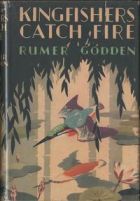
Kingfishers Catch Fire (1953): Taking her title from a Gerard Manley Hopkins poem, Godden wrote this later novel partly inspired by her own experience as a young Englishwoman and mother in a remote part of India during the 1950s. The impoverished post-colonial village is emotionally torched by the effects of her presence, and the darkness she hinted at in the much earlier River, becomes menacing and tragic.

Other favorites: China Court, The Greengage Summer, The Peacock Spring

A final word, about romance — love stories and HEAs are not central to my reminiscences about reading Rumer Godden. In her adult novels she frequently explored the constraints and consequences of passions deemed “wrong” in certain social and cultural contexts, but love is at its most satisfyingly triumphant in her books for children.

Betty(s) and Barbara(s): heroines of the ’70s, reading romance, nostalgia, and feminism

I just finished reading a romance novel from 1973 that made me nostalgic even as my eyes were rolling back in my head. This nostalgia is sort of fluid and rippling around several different stones in the river of my recent – and not-so-recent – reading. Apologies in advance for what I know is going to be a rambling and impressionistic post.

In 1973 I turned 10, which is the age my daughters are now (yes, twins). They have Harry Potter and The Hunger Games. At 10, I was still deep in Oz books and Andrew Lang’s Fairy Tales. I was about two years away from reading my first category romance novels, but by 8th grade my reading log was brimming with Barbara Cartland titles.  There wasn’t nearly as much YA romance then as there is now. I loved Patricia Beatty’s YA historicals, and she sometimes introduced an age-appropriate romantic figure for her spunky heroines. Here is perhaps my favorite book from 1973. But barely two years later I read both Gone With the Wind and Jane Eyre during the summer before 8th grade, and the die was pretty much cast: leaving aside questions of comparative literary merit between these two iconic novels, I was looking for romantic tension, Eyre-ish happy endings, and historical settings. I read my way steadily through Victoria Holt/Jean Plaidy, along with Anya Seton and Norah Lofts. And in the ’70s I read hundreds of category romances.

At the time I wasn’t aware of category romance as a particular product distinct from single title romance, but I liked knowing what to expect, along with the fact that the supply seemed endless — akin to Nancy Drew mysteries, but I wasn’t turning into a mystery reader, I was turning into a romance reader. I gravitated to Regencies, and I also read Heyer. I still like books that are part of series, but I haven’t read a category romance in decades, mainly because I look for longer, denser historicals. So it’s been a long time since I read a book like this that reminded me of the simplicity and purity of a Barbara Cartland.

Winter of ChangeI could almost hear Angela Lansbury singing A Tale As Old As Time in the back of my head as I was reading WINTER OF CHANGE, by Betty Neels (Mills & Boon, 1973; Harlequin re-release 2001). The hero isn’t a beast, but it was enchanting and refreshing to revisit the kind of romance novel that takes me on a short, sweet, straightforward emotional journey with an old-fashioned style couple. It made me feel sort of sentimental, even though Neels’ story is much more astringent than saccharine.

It was Liz over at Something More who first mentioned Neels to me when we shared our mutual admiration for the tweedy, shabby mood of Barbara Pym’s wonderful novels. And indeed I found this Neels romance did evoke Pym-ish gentility with its focus on mundane aspects of domestic arrangements and its understated approach to passion and emotion.

Interestingly, it was in the 70’s and early 80’s that Pym’s novels enjoyed their greatest popularity, as Salon noted last spring. And indeed that’s when I was enjoying ’em – as a much younger reader, curiously fascinated by Pym’s dissatisfied middle-aged couples, lonely spinsters, and generally deflated Oxbridge atmosphere.

But back to Betty and WINTER OF CHANGE: Distinguished Fabian van der Blocq is older, much more experienced, socially and professionally powerful. Mary Jane Pettigrew (yes, she’s really called Miss Pettigrew) is a classic ingenue – clever, petite, hard-working, modest and unassuming — one of those brave-girl-in-the-big-wide-world characters. Not much happens plot-wise — she’s an orphan, raised by her grandfather who is dying. They meet when Fabian, nephew of said grandfather’s dearest friend, is appointed guardian of her inheritance. They are at utterly different stages of life, and she resents his having any control over her affairs. They observe and admire each other, but privately, so that for much of the book when they are thrown together they spend their time being diffidently polite or openly antagonistic to each other. Mary Jane in particular becomes almost petulant, and entertains another suitor in a foolish gambit to get Fabian’s attention that, predictably, ends badly.

Neels, a former nurse, was known for her hospital-set romances, and there are medical situations in which both Mary Jane and Fabian learn about each other through observation of interactions with patients and relatives and with their shared vocation of healing. Yet the barriers imposed by the guardianship remain firmly in place. Mary Jane refuses to admit, even to herself, that she’s in love with the tall, dark and remote surgeon, though it’s evident to the reader throughout. Fabian is actually quite thoughtful and even tender at times, but he feels honor-bound to refrain from getting involved with his ward because of their age difference (he’s 40ish; she’s 22).  He pivots from complimenting her appearance and noticing her preferences with genuine concern for her well-being, to antagonizing Mary Jane with his control of her affairs and remote detachment.

Of course it’s harder to know what he actually thinks about her because the entire book is written from her POV.  This contributed to my sense of nostalgia — transpose the setting to Regency London and it could have been a Barbara Cartland duke and his ward. They seesaw back and forth between “chance” encounters where their delight is obvious, and separations and second-guessing where the young heroine in the pangs of first love despairs of ever catching his attention in that special way. Since we never get inside the hero’s head, it’s all about the chaste and unconsummated minuet of anticipation as played out in the heroine’s inner dialogue, until the final few pages when circumstances threaten to part them forever–unless love is finally declared.

The ending is brief and almost matter-of-fact; the tension is romantic but far from sexual. So the reading experience gave me a sense of nostalgia for the romance reading I did as a young teen. And yes, I realize it’s only my own filter that so distorts the brisk and efficient Betty Neels as to make this book seem to have anything to do with a Barbara Cartland flight of fancy. Since Neels has a lot more of Barbara Pym than Barbara Cartland going on, it’s as I’ve applied a some kind of rosy regency Instagram effect to the whole thing. Neels in her own right has immense nostalgic as well as immediate appeal, as the Bettys of The Uncrushable Jersey Dress have brilliantly documented. But I am a first-time Neels reader, and she’s making rather a complicated impression.

Within the confines of the novel itself, WINTER OF CHANGE’s early ’70s setting gave me a different flavor of nostalgia.  It’s long enough ago to almost feel like a historical.  Except, not. It’s a primary text for a historian of the 70s. To start with the good — in spite of the slightly downtrodden, mousy  way that Mary Jane is described (and describes herself), the first chapter sets her up as an early ’70’s career gal in a way that reminded me a bit of Marlo Thomas and Mary Tyler Moore. She drives a Mini, watches her budget but saves for expensive shoes and handbags, has a good education, and earns a respectable living in a profession that maintains her position as a member of a privileged social class. Yet she’s clearly not totally on her own, living as she does in the nurses’ residence at her hospital with a loose group of friends but emotionally isolated without family or other primary relationship(s).  It’s an idealized, semi-autonomous kind of That Girl! independence: Marlo and Mary had their own apartments but constantly hovering parents, neighbors, and boyfriends.

On the flip side, there’s no denying that any vaguely mod, second-wave-feminist elements of Mary Jane’s situation and character are heavily outweighed by the entrenched sexism Neels’ novel reflects.

As I was reading, I started keeping track of all the places and times where Fabian thinks for Mary Jane, makes decisions for her, and takes care of her needs in a way that is both delightfully thoughtful and totally high-handed. Yes, he’s legally her guardian, but why is this romantic? If they met some other way, Fabian would have to pursue Mary Jane much more actively; what’s interesting about the guardianship is that it makes explicit that his role is to guard and protect — and direct — her like a parent.

One way to look at this may be simply to chalk it up to the alpha hero convention in romance. Guardianship gives Fabian legal rights to go along with his romance-y alpha motivations to protect and possess the heroine by manipulating Mary Jane’s circumstances. I don’t know (or remember) enough about the genre in the ’70s to say whether alphas were as normative and popular then as they have been in later decades.  Certainly controlling alpha heroes have been around in romanceland since, well … forever. So Fabian isn’t really all that remarkable, except that meeting him 40 years after he was written means I’m bringing a lot of baggage along for the read.

Jackie suggested recently at Romance Novels for Feminists, that in the wake of 50 Shades we are experiencing another wave of uber alpha heroes, noting the “obsessive” alpha tendency in particular. There are probably way more than 50 shades of obsessive when it comes to romance heroes, so I guess my feeling is that the most direct and obvious result of the 50 Shades phenomenon is the kinky billionaire hero.  And here’s where I wend my way back to Fabian and Mary Jane. No, there’s no kink. There’s no sex.

But it’s a lot like a Billionaire/virgin D/s dynamic, without the BDSM. He’s so much wealthier than she is, and even when she attains financial security, it’s simultaneous with losing control of her own affairs. She stops working — he even makes the phone call to her (dowdy, of course) female supervisor and charms the beleaguered Hospital Sister out of requiring Mary Jane to give her month’s notice! Definitely shades of (Christian)Grey. Fabian then tells her what kind of clothes to purchase for her new life and whisks her to his home in Holland to serve as private nurse to his uncle.

He’s not obsessive — Mary Jane does return to her home alone (at this point they are both stupidly pretending they’re not in love with each other). She gets to make her own mistakes – almost. Fabian intervenes to save her, then disappears again leaving behind some achingly romantic Christmas gifts – almost as if he is waiting for her to grow up. She, of course, has no gift for Fabian because she’s too busy being snippy at him for rescuing her from a bad situation she was too blind to realize spelled certain disaster.

But regardless of their lack of intimacy or proximity, Mary Jane’s life is unalterably changed by her removal from her profession to an entirely domestic and social sphere. She’s expected to live in the manor house she inherited, do good works in the village, and marry well. Predictably, she gets frustrated, bored, and “headstrong” — in her own naive way (this is when she takes up with an entirely unsuitable suitor). It’s as if she’s a trapped housewife, with Fabian in control from afar. I kept thinking about The Feminine Mystique (another Betty) — and wondering if things would get any better – or just stay the same, or even get worse – once she inevitably married him. The book ends with a restrained yet believable HEA when Fabian basically pulls an “of course I love you, silly, and we’re getting married.” As a romance, the novel works. On one level, I was satisfied, and happy for both of them. But there was something that didn’t quite sit right. Perhaps, unlike a Pym novel, the book is just not powerful or compelling enough to transcend its vintage setting. I can’t escape the feeling that Mary Jane is 5, or maybe 15, minutes from Diary of a Mad Housewife — or Valley of the Dolls (easy access to pretty pills!) Or a Bell Jar experience.

So – is there any point to this meander down nostalgia lane? Somehow, reading this rather unremarkable romance from the ’70s brought me back to adolescent romance reading and mod heroines, and then around the long bend to 2013 and billionaires tying up virgins.  In spite of the length of this post, I’m left with still more questions.

Is Fabian “worse” than a Christian Grey-type hero because though he wouldn’t dream of striking her, he takes control of her life without Mary Jane’s consent? At least Anastasia got to negotiate her contract, and she kept working. (I did read all three of the E.L. James novels, and I rather choosily read other erotic romance from time to time.)

Would it make a difference if Neels had written sections from the hero’s POV? Maybe the relationship wouldn’t feel so unequal if we could get inside his head and hear how Mary Jane affects Fabian. (I do plan to give Neels another chance to captivate me – next up: ESMERALDA. I have the sense that it’s not any one Neels book that wins you over, it’s her body of work — and I’m ready to read on.)

If Neels were writing today, would she be writing billionaire doms and submissive virgins (who work in hospitals)?

I’m curious to hear what others think about Betty (Neels), for those who’ve read her, and also what about the Barbaras? I sometimes think I am the only person who ever actually read a Barbara Cartland romance. Or is willing to admit it.

Finally, just because I was curious, I looked up their dates —

Betty Neels (1909-2001)

Betty Friedan (1921-2006)

Barbara Cartland (1901-2000)

Barbara Pym (1913-1980)

Reader, they married. What if Jane Eyre were a series?

What if Jane Eyre were a series? Would we like to hang out with the Rochesters as a married couple?

Full disclosure:  I’m not actually going to talk about Mr. & Mrs. Rochester all that much. It’s not a series and Charlotte Bronte didn’t write a “Thornfield Book 2.” So if you are offended by a mild Bait & Switch approach, let me offer my apologies. But there’s another Bronte-esque, moody married couple I have been spending time with lately, and it’s got me thinking…

Back in May I posted about my intoxication with the gothic, Eyre-ish romance of Lady Julia Grey and the maddening, enigmatic Nicholas Brisbane. I’d just finished Book the First in Deanna Raybourn’s Silent trilogy, and it provoked me to indulge in a near-orgy of adulation for this couple as a re-invented post-feminist, mystery-hunting version of the challenging, unequal, yet deeply satisfying romance between Jane and Rochester.

In August, I gobbled up three more tales about Brisbane and Julia, and I’ve been thinking a lot about what makes these novels work as romances. They’re not published as such but the marketing – especially the original paperback editions (US only? I’m not sure.) – suggests the romance genre and I think they enjoy a wide popularity with romance readers, in addition to the nebulous “women’s fiction” readership and/or lovers of romantic historical fiction.

Having just finished the fourth novel, I am currently visiting with the Brisbanes as newlyweds. They are enjoying what would in a traditional romance be their well-deserved HEA. They’ve had an extended honeymoon across Europe, solved a mystery in India, and are preparing to make their home in England together.

A quick recap: Silent in the Grave (2007) introduced Julia and Nicholas over the dead body of her husband. Secrets emerge, the murder is solved, they get in each other’s way a lot, conversations smolder. Destiny is foretold; gratification delayed. It’s achingly romantic, and I loved it.

In Silent in the Sanctuary (2008), they meet for the first time after a year’s separation when Julia’s father throws them together at a large house party where a murder occurs and everyone is trapped by a heavy snowfall. A classic whodunit-at-a-house-party story. What ensues is a reluctant courtship of sorts, with other potential lovers aplenty and Brisbane nursing — in his inimitably enigmatic way —  all the carefully constructed reasons he ought not to act on his obviously intense attraction and deep emotional connection to Julia. This is Brisbane at his most maddeningly remote.

Silent on the Moor (Lady Julia, #3)With the third novel, we reach the most Bronte-esque of settings when Julia tracks Brisbane to his neglected Yorkshire estate, complete with colorful household staff, a windswpet moor, and a madwoman. Silent on the Moor (2009) is the story — at last — of this couple’s reconciliation and acceptance of their feelings for one another. At last they marry. But Raybourn infuses the conclusion of the Yorkshire book with sufficient uncertainty to leave plenty of room for further romantic tension and conflict in subsequent novels.

Dark Road to Darjeeling (Lady Julia, #4)And of course, this is precisely what we get with the next book, the start of a new, “Dark” trilogy: Dark Road to Darjeeling (2010). I still love this couple, and I’m willing to follow them down at least a few more dark roads.  But I found myself falling out of the story more often as I read, and looking harder at whether it still reads like a romance.

The series is ineffably clever and Raybourn sustained the buildup of romantic tension so well over the first 3 books.  At the same time each novel has its own narrative arc that tracks with many romance conventions.  These include a sudden and/or unexpected meeting, mutual attraction  and romantic entanglement, a dangerous situation, fear for the loved one’s safety, deception of the beloved (often motivated by protective urges), confrontation, betrayal, rejection, reunion, and ultimately a satisfying yet tantalizing expression of love and dedication. The first two such expressions are somewhat oblique, but potently symbolic. While they certainly don’t constitute a traditional HEA, they are enough to scratch the romance-reading itch that demands some kind of declaration by the hero which is accepted by the heroine. In short, although not romance novels, I found I experienced each book in the Silent series as a self-contained “romance read,” and I rejoiced for Julia and her smoldering Gypsy-blueblood husband, when matrimony was finally achieved at the end of the first trilogy.

Dark Road to Darjeeling opens with marital bliss but quickly tears the Brisbanes apart as they receive information about a possible murder and revert to their pre-nuptial behavior of attempting to manipulate each other and exert control over an investigation in which they each have a particular interest. Julia begins a deliberate campaign to prove her worth as an investigator and withholds so much information that the two are at arms length emotionally even when they are physically reunited about halfway into the book. For me, the first inkling that this book was going to be a different sort of read was the fact that early on I became completely annoyed with Julia’s passive aggressive behavior. She’s too often on the verge of sharing useful information with Brisbane, only to withhold it in order to try and do him one better, and it just comes across as spiteful. But was her behavior different from the previous books, or am I holding her accountable differently because he’s her husband now?

To put it another way, is Julia written differently as a wife character, or am I reading her differently as a wife character? Intrepid and strong-minded, or foolhardy and shrewish? Brisbane as a husband strikes me as about the same combination of stubborn inscrutability, ruthless possessiveness and hidden vulnerability, as he did when he was loving Julia from afar — it does come across differently near the end of the book, but a bit more about that anon.

These questions also remind me that there are very successful romance novels where the H/h are married to each other from start to finish (I’m thinking right now of several wonderful historicals by Sherry Thomas, including Not Quite a Husband and Private Arrangements, but there are also contemporary examples such as Ruthie Knox’s recent novella, Making It Last, which is – interestingly – part of a series). So I don’t think what I’m puzzling over is the question of a married romance vs. a romance that ends with marriage. It’s more about the idea of a series — told over the course of multiple books — that follows a couple over the relationship lifespan – how does that work within the romance conventions, or does it? Can I keep coming back to the same couple, even if I do find them quite intoxicating, and receive the same novel-reading pleasure that takes me on an emotional journey to an HEA (or some kind of stand-in for the HEA) — or will it at some point start to wear?

On the up side – with Julia’s married POV, readers can look forward to elegantly circumspect yet deliciously pointed conversations alluding to Brisbane’s …er, appetites, and the sexual and emotional intimacies of the marriage bed. This kind of thing, along with domestic interactions (he takes lots of baths) and discoveries, deepens the emotional impact of their exchanges and their manipulations. Yet the constant push/pull between them started to wear on me somewhere along about the third or fourth time they played out their cycle of intrigue, deception, discovery, confrontation, rupture, confession, reunion…more intrigue…

But this novel can also be read as a portrait of a marriage in the making.  It’s a very young and fragile marriage between two quite mature and willful individuals. Yes, I grew (quite) weary of Julia’s endless attempts to circumvent Brisbane and her self-righteous and unbecoming piques when the shoe is on the other foot and he out-maneuvers her. By the same token, Brisbane’s high-handedness almost started to seem manufactured or arbitrary, a necessary dramatic element to further their romantic tension. Without stepping into spoiler territory, I must say that I found the test he sets Julia at the end of the book held a slight hint of D/s which seemed to come out of nowhere.

But perhaps what makes the book succeed as a romance is that it asserts marriage itself as a series of these narrative arcs. There are absences and chance encounters, intrigues and partnerships, withholding and separations, confrontations and communions, ruptures and renewals. And these cycles can occur more than once in a couple’s journey. I’m pretty sure most people would agree this is true in real life — the question is, do we want to read about these exhilarating (or exhausting, depending on your point of view and/or what’s happening in your personal life) roller coasters when it’s a fictional couple we hold dear?

Leaving aside the issue that they might not have a new mystery to solve every 6 months or so, would we want to read more books chronicling how Jane and Rochester fared?  I think I probably would find them irresistible, and they’d certainly be commercially viable, but Charlotte B may not have wanted to write them.

This may be one of the important ways Brisbane and Julia are NOT like Rochester and Jane – the mysteries provide the opportunity and the means for new chapters of their married story, and their ongoing battle of wills provides the motive to keep reading – and writing – them as romances.

2006 film adaptation of Jane Eyre, an apocryphal final scene

* * *

The Lady Julia Gray series is published by the MIRA imprint of Harlequin. I purchased copies of these first four books at my local used paperback shop. I’m hoping they may have a copy of #5 – The Dark Enquiry when I stop in there this week. If not, it’s going in my Amazon cart, because I’m definitely along for the ride with the Brisbanes, in spite of my quibbles.

Crooked Romance: what is it with Patricia Gaffney?

Know When to Walk Away, Know When to Run: a comedic, gambler-ific western romance that should have been fantastic

The Guy: Reuben Jones, veteran confidence man, wisecracker, card sharp. Always on the move, he’s a gambler with a million disguises, a secret yearning for home and family, and a crippling fear of knives.

The Girl:  Grace Russell, bold, scrappy con artist who can charm dollars out of wallets and into her pockets a million different ways, yet elude surrendering her virtue or her heart.

Crooked Hearts

Brought To You By: Patricia Gaffney in Crooked Hearts, Signet 2001 (originally published 1994).

From the publisher, courtesy of Goodreads: 

THE CON MAN
Reuben Jones walks on the wrong side of the law — a card shark, a master of deception, a man who long ago buried the truth of his life so deep that no one would ever find it…

THE LADY
Grace Russell has had to learn a few tricks herself in order to hold on to the crumbling California vineyard that is the only thing in the world she can call her own…

CROOKED HEARTS
When Grace meets Reuben she’s dressed as a pious Catholic nun; he’s posing as a blind Spanish aristocrat. But he gets an eyeful when the pretty sister lifts her skirts to adjust the little silver derringer strapped to her thigh … So begins this sexy, rollicking ride through the gambling halls and sinful streets of 1880s San Francisco, where two “crooked hearts” discover that love is the most dangerous — and delicious — game of all.

The Setting: The multicultural California coast in the 1880’s; Monterey, San Francisco, the Russian River valley.

The Tropes: Hero who Reforms his Conniving Ways; Heroine who Reforms her Conniving Ways; Heroine Clueless that Hero Thinks She’s Married; Partners in Crime; Sham Wedding as Part of Long Con; Stagecoach Robbery; You Got to Know When to Hold ‘Em, Know When to Fold ‘Em; Captive Held in Gambling/Opium Den; Mysterious Chinese Villain.

“Sister Mary Augustine’s little silver derringer was cutting into her thigh.”  The first line was a dead giveaway. This book does NOT have a pokerface. Right away I knew it would be funny, and not to take it too seriously. The first chapters are utterly captivating. Grace and Reuben are extremely likeable, their conversations are hilarious, and it’s strangely refreshing, and rare to read a romance where hero and heroine are both Actual Criminals in need of reform.

In spite of the various dangerous and seedy places the couple finds themselves, this novel isn’t dark and it’s easy to root for the criminals in their various escapades. They’re usually of course up against other criminals who are much worse, and it’s clear that while they are thieves on the run from the law, they recoil from violence.

Reuben is an unusual hero; he’s described as powerful but he’s somehow much less physical than Grace. He’s not especially moody, and only moderately introspective. I haven’t read enough of Patricia Gaffney’s romances to know whether he is an atypical Gaffney hero or not (more about this later) but like the novel itself, he’s unusually blithe for a HistRom hero.

He’s not a badass — he rarely uses his strength to fight and only barely manages to knock out a villain bent on harming — and gang-raping –Grace at one point. Reuben’s badassery is that of the elegant mind game and of witty banter; he’s physically appealing but not physically intimidating. He’s so good at playing out a long con, where patience, control, and the ability to amuse and distract are the skills in his arsenal. But he seems almost passive when the fur is flying and people – even Grace who has become firmly established as the object of his desire – are in danger.  It’s hard to make a man who fleeces people, and runs rather than stand and fight (or face consequences), appealing and sexy, but somehow Gaffney manages to pull it off and I quite liked him.

Grace is equally appealing, and more of a badass in the customary ways: she knows her way around her firearms and she comes up with the bravura self-sacrificing move that saves the day at the end of the long con game. It’s all a bit of a romp, nicely infused with a strong feel for historical California and the early days of the wine industry there. So. If you’ve managed to read this far (Thank You!), you may be wondering why I said it should have been fantastic.

This is clearly the work of a gifted writer with a deft hand at historical fiction, character-driven romance, and funny dialogue. But then there are the parts that are so clumsy and so awfully NOT funny.  The terribly stereotyped villain, an opium-importing Chinese immigrant who runs a whorehouse and 19th century equivalent of a crack house. The horrible – and distracting – use of eye dialect to render the villain’s speech, along with that of Ah You, the ridiculously Confucian, epigrammatic, loyal house servant whose “ancient Chinese wisdom” pushes Grace and Reuben to acknowledge their destiny as man and wife.  And – AH YOU?!? In a romance novel? Ahh, you! Seriously. Unnecessarily. Bad.

Also, I had a bad reaction when Reuben’s suppressed childhood history was revealed and there doesn’t seem to be any reason for him to have had this particular background. I will endeavor to avoid going further into spoiler territory (except perhaps below in Comments), but between Reuben’s “secret” and the strangeness of his profession for a romance hero – he’s an avaricious pyramid schemer among other things – I am again left wondering at the lack of judgment on the part of both author and publisher with regard to ethnic and racial stereotyping. Unless I am just being dense – maybe for some readers this is all part of a spoof-y western quality a la Blazing Saddles, all broad humor and crass stereotypes?? If that’s so, it just didn’t work for me. It’s too sentimental to work as a spoof, especially in the case of the slow reveal of Reuben’s sad history, which, for me, just dragged down the story — he was interesting and vivid enough without it.

I hesitate to draw any comparisons to the only other Gaffney novel I’ve read, because there’s no way in hell I’m going to be able to adequately address it. For one thing, I was unable to finish To Have and To Hold, which I had with me on vacation last month. For another, THatH has been the subject of intense and incredibly rich discussion in romance bloggery in recent months, with Liz’s discussion here at Something More offering both a lengthy and wonderful review as well as numerous illuminating contributions in the Comments, and links to the best of other reviews and discussions.  It’s probably a big mistake to even bring up this immensely controversial and widely discussed book.

But I admit I am just stumped by Patricia Gaffney. I read a lot of romance in the 90’s but hadn’t read the Wyckerley novels or any of her other romances. I first thought about reading To Love and To Cherish when I posted a review  of Julie Anne Long’s Pennyroyal Green romance with a vicar for a hero (A Notorious Countess Confesses) and posed the question of whether a clergyman can be made into an appealing badass hero. Nicola from Alpha Heroes suggested looking at Christy, and I soon discovered that many other readers were looking at the Wyckerleys. Gaffney seemed to be everywhere this summer. Redemption and rape, cruelty and strength, interiority and connection — since I’ve returned home with THatH half-finished, I’ve schooled myself by catching up on the rich and challenging discussions that have taken place online recently around this unusual book. At the same time, I decided to give Gaffney another try, and I had Crooked Hearts on my TBR shelf along with Thief of Hearts and (still unread) TLatC.

What a relief it was to settle into a story that was clearly so different from Rachel and Sebastian’s tortured tale. The unusual setting and the humor drew me in right away. They meet on a stagecoach and it’s so clearly a partnership of equals. But then the disconnect started to distract me, even as I was enjoying Grace and Reuben’s various capers and escapades. Not only does Crooked Hearts lack the dark grimness of To Have and to Hold, but it also lacks the power and complexity. This in itself had me scratching my head because the difference goes deeper than the setting and tone. The two books are so vastly different I just couldn’t stop over-thinking every point of contrast. (If anyone’s read both and wants to argue they share some deep connections, I’d love to hear it!)

True, I did not (yet?) finish THatH  — I was unable to keep reading when I ran up against the worst of Sebastian’s humiliating treatment of Rachel. But this probably had something to do with being far from home and in need of a comfort read (my bad for even bringing it with me – I was supposed to only be reading road romances!).  I was deeply impressed by the writing itself, with its unsparing and multi-layered depiction of both characters’ inner lives.

In contrast, in place of raw and unsettlingly ambiguous elements of inequality, abuse of power, humiliation, and rape, Crooked Hearts serves up lighthearted criminal capers that should have been pure fun, with a side order of distraction and disappointment in the form of casual racism that doesn’t ring true as satire. Somehow it’s all just not adding up for me  — I am purely stumped by my forays into the crooked, curious, oddly challenging and uncomfortable romances of Patricia Gaffney.

I’d love to hear from others who’ve read any of Gaffney’s “lighter” western romances. There are some others set in 1890’s America with equally improbable storylines, that seem to have found favor with plenty of Goodreads reviewers, but I get nervous about these when I see that there are two such books where either the hero or the heroine is a mute. (Wild at Heart, Sweet Everlasting). Talk about an unequal power dynamic rife with risk for stereotyping of characters with disability. I think I may need to steer clear, but I would love to be persuaded otherwise, since Gaffney is so clearly a writer of depth and skill.

Finally, I can’t conclude without confessing how hard It’s been hard to get the Kenny Rogers lyrics out of my head while I’ve been thinking about Crooked Hearts. The Gambler is one of those big-sky songs that can sort of morph to fit almost any situation — perhaps even my take on the mixed bag of Patricia Gaffney’s wild west romance:  Now every gambler knows that the secret to surviving / Is knowing what to throw away and knowing what to keep / ‘Cause every hand’s a winner and every hand’s a loser / [And the best that you can hope for is to die in your sleep.] Crooked Hearts is both a winner and a loser – and maybe the best that I can hope for is to read something else tonight that totally takes my mind off of these long and winding musings!

Crooked Hearts is available in the usual formats and places. I purchased it at my local used paperback shop.


Road Warriors

ONLY HIS: Elizabeth Lowell’s badass Rocky Mountain westerns and reading on the road

The Badass: Caleb Black, mythic gunslinger in black, the Man from Yuma with a badass reputation as wide and wild as the West itself. He’s feared for his ruthless skill with weapons and survival skills but he earns respect for his decency, restraint, and sense of justice.

The Lady:  Willow Moran, West Virginian horse whisperer, survivor of the war-torn heartland, steel magnolia. He calls her “southern lady” but she’s tough as nails underneath the blond hair and husky drawl.

Only His (Only Series, #1)Brought To You By: Elizabeth Lowell, in Only His (2003, Avon (originally published 1996); also available as a 2009 e-book from HarperCollins. First of 4 novels in the ONLY series.

From the publisher, courtesy of Goodreads: Escaping the ravages of the Civil War, a gently reared lady must leave behind everything she knows — and trust her life and her future to a dangerous gunfighter with a passion for vengeance.

A team of prize Arabian horses is all that Willow Moran has left — and Caleb Black is the only man who can help her reach her brother in the Colorado Rockies. But she fears this stranger who burns to avenge the wrongs of treacherous men. For Caleb is as wild and unpredictable as the uncivilized land he loves. Yet, though she challenges him at every turn, the spirited southern lady knows this proud, enigmatic loner is her destiny. And no matter what peril awaits, they must face it together — for Willow has become a fever in Caleb′s blood … awakening a need so fierce that he would defeat the devil himself to possess her.

The Setting: the American West immediately following the U.S. Civil War; Colorado, Arizona and the wilderness of the Rockies; the San Juan Mountains to the southwest.

The Tropes: Virgin Mistaken for Prostitute (“Fancy Woman”); Road Romance (grueling journey across the mountains on horseback); Hero Vowing Vengeance Against Member of Heroine’s Family; Virgin Awakened to Her Sexual Nature; Lone Gunslinger; Steel Magnolia.

IMG_0734

Shiloh National Military Park, August 2013

Road Warriors   I had read the 3 other novels in Lowell’s ONLY series last winter, so when I found a copy of this one at my favorite bookshop, I snatched it up to read on vacation. What luck – it’s a road romance, and the travel hardships endured by Caleb and Willow made my own roadtrip’s minor inconveniences and long hours behind the wheel fade into insignificance. Although my own journey (some 3,600 miles from New England down through the Southeast and back) did not take me to the Rockies, I enjoyed Lowell’s vigorous rendering of a uniquely American landscape with its wide open spaces. This story unfolds with a powerful evocation of harsh and dangerous mountain passes, and the battle to conquer each peak and cover every hard-won mile. An incredible contrast to days spent on interstates and blue highways, but it helped keep me grounded in the period when we visited Gettysburg and Shiloh, or learned about the early 19th century exploration of Mammoth Caves, in Kentucky.

Both Caleb and especially Willow are scarred by their experiences surviving the War and its aftermath, and their story is set during the chaos that followed when so many bereaved and/or displaced Americans, from both North and South, were on the move, seeking to rebuild lives and find new places to call home. Since I got home, I’ve been watching new seasons of the dramas HELL ON WHEELS and COPPER, both also set in the aftermath of the Civil War — I won’t digress further here except to say it strikes me more than ever as a period of intensely violent upheaval and social and economic chaos with people from all over the world drifting across the landscape and fighting for a place in a raw new world. Also, Anson Mount’s bearded Cullen Bohannon (HELL ON WHEELS) strikes me as a dead ringer for bearded gunslinger Caleb Black.

With Only His I found much to like about the character-driven romance itself. Willow is straightforward and likably no-nonsense. She’s pretending to be married because it feels safer to travel alone that way. She hires Caleb as a wilderness guide to see her safely to her “husband’s” homestead in the San Juans. But she’s really taking her prize horses to join her brother, who may be her last remaining family. This deception is countered by Caleb’s withholding the fact that he seeks the same man — who he really doesn’t believe is her husband — for a blood vendetta.  It seemed clear to me from the start that Willow’s brother will turn out to be an OK guy (well, I also had already read Only You, in which he takes center stage as the hero), and I didn’t mind this device to drive the plot conflict as much as some other Big Misunderstandings, largely because for most of the book Caleb keeps his vengeful fixations to himself so Willow — and the reader — are spared a lot of angst-y melodrama getting in the way of the growing attraction and love between them.

Anson Mount as Confederate veteran and railroad builder Cullen Bohannon,
AMC’s Hell on Wheels (season 3 publicity image)

Lowell’s romances have an old school feel, with strong, ruthless heroes and plucky, virginal heroines. They’re well-crafted, cozy reads in which it’s easy to settle in and enjoy the slow build as the characters banter and get to know each other without a lot of tricky plot twists. There are villains, and enough shoot-outs to feel like the Wild West (Caleb’s gun-handling skills are legendary, after all, and Willow shows him she knows her way around a shotgun when it counts). But the main focus remains on their deepening emotional connection, and their shared love of horses and wilderness.

In terms of heat level, there are numerous explicit scenes where the slow build climaxes (if you will…) and the prose turns slightly purple, with lengthy passages devoted to the hero’s awakening of the virgin heroine’s innate sensuality. For me, this tendency to dwell on the gradual deflowering didn’t become tiresome because the pace of the novel allowed me plenty of time to genuinely like Caleb and Willow and enjoy their enjoyment of each other. Their physical awareness and increasing attraction is linked to growing respect and admiration. He is bent on seduction but respects her boundaries with graceful courtesy so we don’t stray into dangerous forced seduction territory and Lowell manages to make Caleb’s restraint and patience sexy – all that leashed power under tight control in a possessive, predatory yet patient hero. But  I did find myself skimming once or twice during a love scene that felt repetitive, and the patient trout-tickling metaphor is a little worn.

My favorite of the four ONLY books is Only Mine, which pairs a half-blood Cheyenne/English aristocrat hero (Wolfe Lonetree is a friend of Caleb’s who helps him rescue Willow in Only His) with a blueblood English miss. I’m pulling it out for a re-read this fall. I have a feeling I will enjoy running into Caleb and Willow again, and I’m very glad I had them along for the read while I was on my road trip. I only wish I could keep track of which book is which – the titles are no help at all, and it turns out I read the first book last.

Only His is available in several editions in the usual formats and places. I purchased it at my local used paperback shop.


Romances to Read on a Roadtrip?

Badass Romance is On the Road until September

Most reliable bloggers no doubt announce any hiatus in their bloggery well in advance of taking time off.  But here it’s been weeks since my last post  – ack!  I didn’t plan to take a vacation from blogging so much in advance of my actual vacation. I suppose posting this now is pretty much a case of Closing the Barn Door After the Horse Has …. etc.   It’s been an incredibly hectic summer and Badass Romance has really already Gone Fishing.

road15

But today I realized I haven’t decided which books to take with me. Hoping you will forgive this brief post to tell you a bit about my trip and solicit suggestions for what should go in the duffel bag and/or on the iPad.

I am heading out to drive about 3,000 miles with daughters in tow — from our home in the Commonwealth of Massachusetts we will journey through the states of Connecticut, NY, NJ, Pennsylvania, Maryland, Virginia, North Carolina, Tennessee, Georgia (only a corner), Alabama, Mississippi, Kentucky, and West Virginia (and then home again after visiting friends in Washington, DC).  I’m a homebody who loves to visit new (to me) old places.  I’m also a sucker for the romance of the open road itself. Continue reading

Sex and the Single Girl: The Story Guy by Mary Ann Rivers

Do single people read romance stories differently?

I can hardly remember the last time I read a contemporary romance. So when I started seeing all the buzz on Twitter about The Story Guy by Mary Ann Rivers, I was mainly letting it flow around and by me.  But many bloggers and authors I really admire and respect just kept saying such amazing things about this novella.  Literally dozens of 5 star reviews on Goodreads. And then there was a giveaway (an easy one, that didn’t involve rafflecopter, thankfully!) … Well,  I was intrigued enough to toss my twitter handle in, and I won a copy — or more accurately,  a download. It’s a Loveswept e-release, currently available for only 99 cents, but still – free is pretty fun.

And it turns out, The Story Guy is … well, pretty damn fun, if you’re in the mood for a well-written quick read featuring “…a good guy with a bad story doing something stupid.”

The Guy: Brian Newburgh, bicyclist-thighed federal contracts attorney; lonely and looking for love but with seemingly insurmountable obstacles to a relationship, he begins a quirky (or bizarre, depending on how you feel about personal ads) series of semi-anonymous, semi-public, time-limited weekly encounters for “kissing only.”  In trying to decide whether to label Brian a badass or not, I’ve decided he’s kind of an alphabet soup hero — he shows both his alpha and his beta sides during the course of this unusual courtship. He’s a Story Guy — if you like his story, you may think he’s kind of a badass for loving so fiercely, and he’s got a protective kinda possessive streak that shows to great advantage when we see him act with ruthless tenderness in a big “reveal” scene near the end of the book.

The Gal: Carrie West, self-assured and accomplished librarian with goals and ambitions, at 35 she feels overly single watching her friends pair off and start thinking about babies. She’s an interesting combination of self-awareness and denial, and because the entire story is told in her voice, there’s an interesting play between her authenticity and unreliability as a narrator.

The Tropes: Angsty, Tortured Hero With Secret; Sexy Librarian; Epistolary Romance (IM’ing, texting, phone sex); Love At First Sight; Sexy Stranger.

Yes, there is a lot of Sexy in this powerful little book. The eroticism is a key element of this couple’s journey of mutual discovery; it feels authentic and integral, though I confess to a preference for the sexy conversations and encounters with perhaps fewer descriptions of sensory details (all five) involving gussets and moistness.

The Setting: A large Midwestern U.S. city with a federal building, nice parks with pergolas, and a great library system.

From the publisher, courtesy of Goodreads:

The Story Guy (Novella)

In this eBook original novella, Mary Ann Rivers introduces a soulful and sexy tale of courage, sacrifice, and love.

I will meet you on Wednesdays at noon in Celebration Park. Kissing only.

Carrie West is happy with her life . . . isn’t she? But when she sees this provocative online ad, the thirtysomething librarian can’t help but be tempted. After all, the photo of the anonymous poster is far too attractive to ignore. And when Wednesday finally arrives, it brings a first kiss that’s hotter than any she’s ever imagined. Brian Newburgh is an attorney, but there’s more to his life . . . that he won’t share with Carrie. Determined to have more than just Wednesdays, Carrie embarks on a quest to learn Brian’s story, certain that he will be worth the cost. But is she ready to gamble her heart on a man who just might be The One . . . even though she has no idea how their love story will end?

A story about the power of stories: Carrie is a children’s librarian, and there are numerous wonderful references to formative texts and the impact of fiction and childhood reading, from Where The Red Fern Grows to J.K. Rowling. Brian is a man with a “story” — when things get tough, GBF Justin exclaims, “When I said you should go for Story Boy I didn’t realize he was a Russian novel.” The idea, though, is that in taking this risky step with a stranger, Carrie is opening up her own book for Brian to become a chapter that has the potential to be written in boldface, or poetry, or, as Justin explains, a “life highlighter,” a “big ol’ paragraph of neon pink.”

Although it is admittedly almost too cute for words, I especially loved when Carrie finds out near the end of the book that Brian (for reasons that make sense, but are spoiler-ish) has actually been attending a read-aloud storytime at the city library. Rivers weaves together the several layers of this storytelling metaphor in ways that are compelling and clever.

I can’t say enough about how much I admire and appreciate a book that is itself in love with books, composed with the kind of careful prose that strongly divides readers — some will say it’s too effortful and consciously writerly while others will love it for this thoughtful attention to craft, like a deliciously artisanal wine …  I’m happy to have writers this creative and challenging working in romance.  Sometimes I like artisanal prose and sometimes I enjoy writing so fluid and lovely it just allows me to have the experience without deconstructing the sentences. For me, Rivers was able to strike the right balance, even with the first person narration.

Hero and/or Martyr? As I mentioned, many authors, reviewers and romancelandia thought-leaders have been buzzing about this book. There is a challenging and comprehensive discussion going on over at My Extensive Reading – if you’ve already read The Story Guy, or you don’t care about spoilers, don’t miss out on the amazing conversation Liz is hosting in the Comments. The truth is, I feel many of the important themes and issues raised by this unusual book have been eloquently and sufficiently articulated there, though the discussion covers the full story, including spoilers, so be warned.

It’s actually difficult to review this book or even tell you much about the discussion without getting into spoiler territory.  Although it’s Carrie’s first-person present-tense POV throughout, the conflict and plot hinge on Brian’s familial and emotional history, and the way in which he has managed and compartmentalized his life. His back story is raw and sad and authentic, and readers seem to be divided about whether his restraint is an act of heroism and sacrifice, or a dysfunctional case of misplaced martyrdom. He’s beautifully written, because we mainly hear from him directly, in the form of dialogue, or through Carrie’s eyes. The best parts of the book are the conversations, and Carrie’s minute observations of Brian’s emotions and physical presence.

“It’s what I want. This man and his faraway gaze and rare dimples and gripping hands and voice so sad it called out over all the other sad men’s voices in the city’s most desperate corner. I think I’m wrong to want him, as if I am taking him away from where he knows he should be. I feel as though I’ve picked him out for myself, and with the tenacity and willfulness of a child, I’ve decided nothing else will do.”

Single White Female I’m having a more complicated response to Carrie herself.  I think it’s because from the first pages of this book I had to suspend SO MUCH disbelief about this 30-something woman’s willingness to answer the personal ad. Has anyone been talking about Craigslist in connection with this book?? Because to me this is the part that seems the most fantastical.  The Wednesday-only, kissing-only thing is clearly kind of a fun fantasy, but the mechanism of a faux Craigslist site — ‘the city’s most desperate corner’ — kept bothering me.

I’m wondering if it’s being single that makes this element more problematic for me. It’s true that I am always slower than a turtle in terms of adopting new technologies, and I have resisted Match.com and eHarmony and PlentyofFish in spite of the many many friends who have encouraged me in that direction, even offering to “do all the work”  (eg. write and post a profile) for me. Let me just say firstly that, like Carrie, I don’t have many single friends — I’m surrounded by the happily (or unhappily, in a couple of cases) paired. But of my single friends who, also like Carrie, venture into the online dating world, are well-educated, professional, smart, sexy, in their 30s and 40s and read a lot of books, I don’t think any of them would consider following up on a Craigslist personal.

Single White Female

Bridget Fonda and Steven Weber in Single White Female (1992)
via allmovie.com

I stumbled over this – it only works as a plot device because it’s precisely NOT a matchmaking site and Brian’s only posted his cryptic ad, not a profile. There is a pretty detailed description of the site that makes it clear it’s based on Craigslist. But there’s a vulnerability in being middle aged and single (frankly, at my age, Carrie and Brian both actually seem young, but they’re not immature). Maybe I am just a risk averse wuss, but I kept thinking Whaaat?? I had to keep telling myself that she was just at a low ebb, goofing around reading the ads, clicked on his photo and fell in love with his looks. But. Still. Craigslist criminals can look fetching too, people! And frankly, it’s not just Carrie’s safety I was tripping up on — she becomes at times uncomfortably pushy in her pursuit of Brian and is clearly partly attracted to his sadness and vulnerability. The book skirts around the edges of the creepy, unsafe, stalker-y territory it has relied on for this central plot device, and this is something I’m still wrestling with.

So. Carrie speaks of having few epiphanies, but when she does, it’s internalized to become part of her identity.  It turns out reading this wonderful novella has prompted an epiphany of sorts for me as a reader of romance.

I’m still puzzling this out, but I am beginning to wonder if my general avoidance of contemporary romance is connected to my being single. And (very) middle-aged. I haven’t done any research (yet) and I don’t know how the romance readership demographics are organized relative to various subgenres. But I realized that even though I was at times completely immersed in The Story Guy, and at other times I was pausing to admire the writing, something about it just didn’t take me where I want to go as a romance reader. And that this has nothing to do with this particular novella, and everything to do with its contemporary setting.

Juggling, Leaning In, and Work/Life Balance Aren’t Romantic The Story Guy, like all contemporary romance, is simultaneously too real-world and mundane (eg. “contemporary” with my own harried lived experience) and too fantastical for me. Reading about Carrie whiling away her evening waiting for a new message to pop up, or thinking about how thinly Brian is stretched to manage his work and the other demands on his time — that’s all too close to home for me. So the real-world contemporariness gets me into a place that’s very familiar, which means I have too much trouble going along with the various unlikely coincidences and circumstances through which our H/h meet, resolve their conflicts, surmount all obstacles, and reach their HEA.

It’s not that I’m not rooting for them, it’s just harder for me to enter into the fantasy. In a historical romance, or paranormal, or even an occasional 50 Shades clone erotic billionaire story, if it’s done well I’m already immersed in an alternate reality, and while I do care about historical authenticity, I can more easily let go of rigid adherence to questions of plausibility, plotting, and coincidence.

Miss Lonely Hearts? Shame of a Single Romance Reader? I don’t have time/space now to take this up fully, but my response to Carrie and her Craigslist gamble — which tapped some ambivalence about being single and the online complexities of contemporary courtship activities — got me thinking about the issue of reader shame again.  I talked about this in a different context last month. Is there more/different stigma attached to reading romance for women who are single? We may be reading for many of the same reasons (pleasure, fantasy, escape, immersion, imagination, emotional satisfaction, id vortex,  HEA guarantee, etc) as people who are at other points on the relationship spectrum (dating, divorced, married, living together, hooking up, you name it…) but do we feel that our reading habits may be judged differently? How do I feel about the baggage that comes with friends who I know are thinking that I read romance so much of the time as some kind of “poor substitute” for a relationship?

To be continued…. and I would love to hear your thoughts on this as I ponder a future post.

Wharton Holiday: Pictures from a Literary Side Trip

This gallery contains 25 photos.

In honor of summer vacations, a leisurely look at The Mount, the house Edith Wharton designed and built as her summer retreat, for writing, reading, and small house parties with good friends. Wharton may be sort of an odd fit for a romance blog, but I’ve always been fascinated by her. Neither her fiction or […]