Widow and Orphan: What Jane Eyre and Julia Grey Have In Common

I am a latecomer to the novels of Deanna Raybourn.  She has a new release set in colonial Africa out just last week, but just last night I finished Silent in the Grave (2007), which is the first Lady Julia Grey book, a Victorian-set mystery. 6933131

Being compulsive about sequels, I’ve already begun Silent in the Sanctuary (2008), which is the second book in which Julia will — it appears — solve a tangled mystery in the smoldering and rather mysterious company of investigator Nicholas Brisbane.

Charlotte Bronte, on the other hand, has been in my life since my early teens. I’ve posted recently about the enormous influence of Jane Eyre on my tastes and preferences as a reader, as part of explaining (for myself, mainly, and also for anyone else who’ll listen) why the hell I decided to start this blog.  🙂  Jane is a key figure in my literary back story – why I love reading, why I love romance and history and moody gothic tales, why in spite of knowing the absolute opposite is true, I still sort of think being a governess sounds romantic….

I didn’t expect Jane to keep cropping up all over the place this week, but it’s been a week of Big Thoughts about romance and history, and my bedtime reading has put me in a shadowy Jane Eyre mood.  Silent in the Grave is a Harlequin MIRA romantic mystery, so not a traditional HEA romance, but it’s honestly the most achingly romantic book I’ve read in a while.

At the center is an attraction compulsion that provokes me like Jane and Rochester with its subtle complexity and oblique intensity.  Julia and Nicholas positively spark and flare, generating heat without sex scenes, just by being in a room, circling each other, worrying about each other, vaguely threatening each other.

bbc2006

I realize I am not the first to see Bronte resonances here.  There’s the incredibly tangible atmosphere of a gaslit Victorian England, from the overstuffed privilege of a fashionable family home to the grim surroundings of the expendable classes (prostitutes, orphans). Yes, I know it’s 1886, and Jane Eyre was published in 1847, but I’m talking about a mood here, people.  I can’t wait to get to the third book, where they’ll head north to the moors and I can picture them, windswept and wild, stalking each other until they finally succumb to the lust!
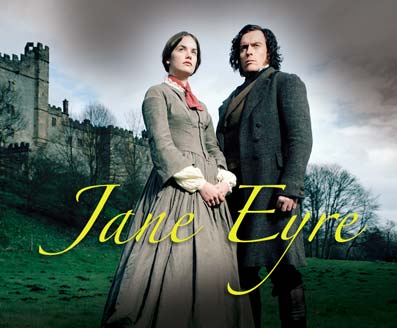
Jane Eyre 2007Because of course the most resonant thing about this book is the relationship itself, and the way Julia and Nicholas interact.  This above all is what puts me in mind of Jane and Rochester.  It’s something about the way they inadvertently both madden and seduce one another, with intellect and conversation and a hands-off but incredibly latent and irresistible sensual appreciation for each other’s physical presence and appearance.

Of course what’s totally different for Julia is that she is in fact a widow, and not an orphan.  Her very involved and encouraging family are another delightful aspect of this book, though even without them, this heroine enjoys a much less precarious position in Victorian society than poor long-suffering Jane.  As MacPudel so astutely pointed out in a Comment on the Historical Romance brouhaha this week, heroines who are believably in a position — economically and socially — to make their own relationship choices — in a historically accurate historical novel — are hard to find.

jane_2006_4_465x310I always thought of Jane as unrelentingly strong-willed, and from the start I loved how she made herself Rochester’s equal in intellect and conversation, but when push comes to shove, her existence as a single woman of no family is dangerously marginal and fraught with peril.  When she does make her own choices, her independence comes at a huge price. But Julia has the means to be independent, or at least as independent as was possible for a young widow with a fond father to be.  Not only does she not serve Nicholas as member of his domestic staff, but she has actually sought his services as an investigator and has a higher social status.

So it would seem Julia and Jane really don’t have very much in common at all.
tobystephens

Except for the romance.  The intense fixation on a charismatic, brooding and tormented hero who himself is unable to tear himself away from watching and waiting for the woman who challenges and fascinates him.

Bottom line — if there’s anyone reading this who hasn’t already read the Lady Julia Grey series, I’m going out on a limb to highly recommend after only one book.  And I just can’t stop thinking about the ways this book is getting under my skin because of its smoky Jane Eyre echoes. Reader, find. A. Copy.

Fellow Jane fans will likely notice I’ve only used pics from the 2007 BBC production with Toby Stephens and Ruth Wilson.  I know claiming a “best” adaptation is controversial, but in my mind this is absolutely it.  Love love love the sizzling chemistry between these two – it was the first film adaptation where I actually felt the heat, and where Rochester was both unappealingly beastly and astonishingly gorgeous in a way that made sense to me.  

So what about you? Which is your favorite Eyre?  And for those who are ahead of me on this, and have read the Silent series, what do you think?  Are Julia and Nicholas as epic as Jane and Rochester?  

Historical Romance – Lament, or Let it Die?

As a new blogger, an important piece of my learning curve is keeping up with the buzz on Twitter and on established romance and book blogs, and participating in discussions in order to exchange ideas and get to know some other bloggers.  I’m posting here at “home” now because there’s so much interesting content about this topic, and my own musings are growing too lengthy for commenting on other pages.

books1

For about a week I’ve been following a wide-ranging discussion about historical romance that’s happening on several of the major romance blogs.  (And before I go further, let me just say to my currently quite petite band of Badass Romance followers — if you haven’t checked out the blogs at All About Romance and Dear Author, you are really missing out on the best the romance community has to offer in the way of cross-cutting dialogue and commentary about everything from book covers to publishing trends to literary criticism, along with INDISPENSABLE book reviews.)

Lynn at All About Romance asked Where Have All the Historical Romances Gone?  Since the intersection of history and romance fiction is my personal reading sweet spot, this caught my attention right away, and I jumped in to comment, along with a host of other readers and — this is one of the (many) super cool things about AAR — a bunch of historical romance authors, including the actual people who are actually responsible for some of my favorite recent reads in this genre. (!!!) A squee!! moment — ok, and here I am just trying out this term frequently employed in romance bloglandia for when you sort of interact with an author and get all “fangirl” about it….

7756458So I don’t mind if you skip the rest of this post — if you are looking for an actual good new book to read, go right now and find yourself a copy of Libertine’s Kiss, by Judith James. A non-Regency historical romance that is not to be missed.  I have been meaning to make a review post about this book for weeks! A Restoration tale, it earned DIK status at All About Romance, and features one of my favorite romance tropes: second chance at love.

OK, back to the Big Picture.  Anyway, this week I also started more actively following some of these folks on Twitter.  So that’s how I “met”  Evangeline Holland,  an author of historical romance who also blogs about Edwardian history. Her post offered another angle on The Trouble With Historical Romance, and another blogspace to talk about this with, again, readers as well as writers.

Over at Dear Author, this morning Jane says We should let the historical genre die. Which is a bold statement, but I realize I agree with what she’s saying.  Or at least with what I think she might be saying.  Can I just say that I agree with my own interpretation of this bold post?  How ridiculous, but here is what I want to say:  although I have been commenting in a very lamentatious fashion on many of the blog posts this week, I realize that the books I have been feeling nostalgic about are mostly NOT the current crop of historical romances, which, as everyone has noted, are almost exclusively set in the British Isles of the 19th century (or feature expatriate English lords of that era who may find themselves elsewhere on the globe but for all intents and purposes are Regency or Victorian characters).

It’s not that I haven’t enjoyed recent books from Liz Carlyle, Elizabeth Hoyt, Julie Anne Long, Tessa Dare, Anne Stuart, Anne Gracie, Jennifer Ashley, Meredith Duran, and at least a dozen others.   And there are standouts like Joanna Bourne’s exquisite Spymaster novels.  But what really got me feeling nostalgic about historical romance was thinking about great reads from a decade or two ago — an early Loretta Chase book like The Lion’s Daughter or Mr. Impossible, my first time reading Anya Seton’s Katherine, or a favorite “old school” historical like Elizabeth Lowell’s ONLY series. Why are there so many middling books about Regency lords, while it’s truly hard to find a gem like The Black Hawk, about a thief from St. Giles turned spy for the crown?  I’ve also really liked Pamela Clare’s MacKinnon’s Rangers trilogy, at least in part because of the alternate setting that appeals to my love for colonial American history — but, again, it’s hard to find a lot of books that do romance well in this setting.

Which I guess leaves me agreeing that if historical romance continues to occupy such a incredibly narrow band of history, a fairytale version of England overpopulated with aristocrats, I’m OK with the declining sales.  Jane/Dear Author is probably right that the genre needs to reinvent itself.  Why do we keep reading and buying books about the ton, and then complain about there not being enough historical accuracy, or variety?  Many readers in the AAR discussion suggested reading backlists and newly available e-books from the ’90s and earlier. Romantic Historical Fiction defines itself as a distinct genre these days, and I wonder if that’s another place readers are going…? And I suspect many historical romance readers are also quite happily reading newer titles in erotic, m/m and/or paranormal romance, particularly those well-crafted novels that also feature fundamental themes of honor, loyalty, kinship, defiance, courtliness, and characters who battle the odds to end up on the right side of history.

It may sound odd, but beneath surface trappings of daggers vs. claymores, sizzling sex scenes vs.  stopping at the bedroom door, the badasses of J.R.Ward’s Black Dagger Brothers and Lynn Kurland’s medieval De Piagets and MacLeods have a lot in common.  And it’s these underlying heroic tropes – a lethal combination of boldness, badassery, vulnerability, flaws, charm, and wit – that I respond to as a reader.50718

So perhaps historical romance as it’s currently being published is reaching an ebb that’s organic, cyclical, and necessary. Maybe it’s time to lament, but move on. What do you think? What is your most recent historical romance read? Or have you been reading something else entirely?

———

Other links –

This topic has been taken up on many individual blogs, and in several review posts this week, too.  I’m including links here for several interesting posts that turned up in my recent reading, but this is by no means comprehensive.

Courtney Milan, Digital Strategy in Historical Romance (author, 19thc historicals)

Elise Cyr, Why Historical Romance? (author, medieval romance)

Dear Author’s  Review of Jack Absolute.  (Interesting discussion in the Comments here, about romance readers reading more straight historical fiction as we search out more interesting settings.)

Please Do Not Touch

FORBIDDEN….. About Touching Things You’re Not Supposed To, and When Heroes are Better in Someone Else’s Story

Elgin Marbles

Name:  Jordan Willis, auburn-haired Earl of Blackmore; by day he crusades for social reforms in Parliament, by night he’s busy winning the affections of the bored wives and widows of the ton.

Falls For: Prim yet proper rector’s daughter Miss Emily Fairchild, blackmailed into posing as wild Scottish debutante Lady Emma Campbell.

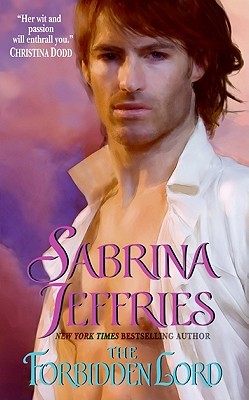
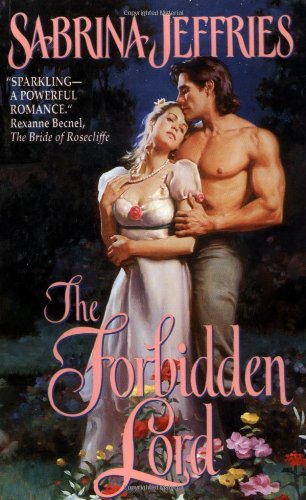
forbidden lordStory Recounted By:  Sabrina Jeffries, in The Forbidden Lord (1999)

Hangs Out In: Parliament, the British Museum, clubs, the opera (London 1819)

Likes: merry “uncomplicated” widows, social reform, his militant sister Sara.

Dislikes: falling in love (but he does fall in the end, and there’s quite a lot of heat along the way!)

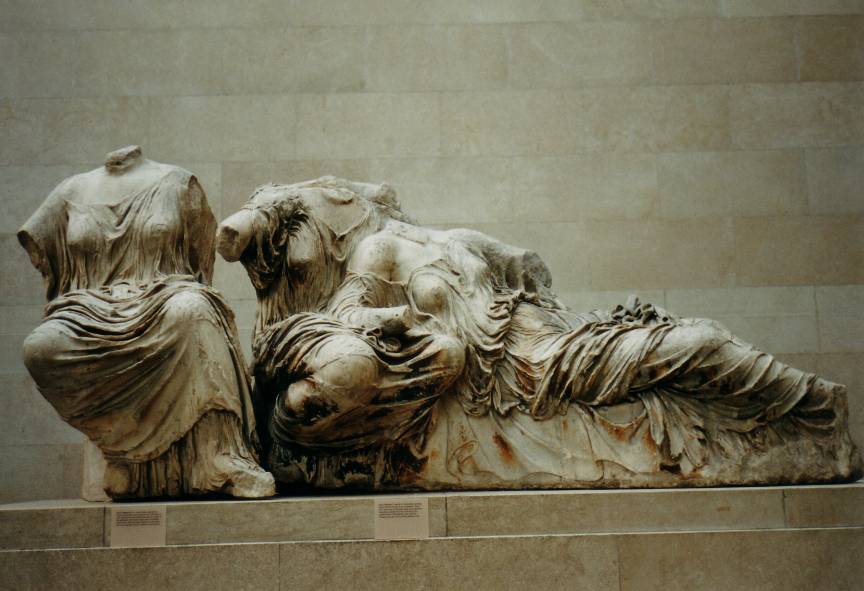
Badass Hero Moment: Arranges sizzling hands-on private encounter with the Elgin Marbles, newly displayed at the British Museum.  “I’m a trustee of the museum…”

Badass Annoying Moment: Insists throughout that he doesn’t believe in love, that his heart remains untouchable and his desire for our heroine is purely physical, yet proves his emotions are deeply involved — and confused — when he’s all too willing to believe the worst of her.

(too) Frequently Described As: Controlled.

Might Look Like:  Rupert Penry-Jones as Captain Wentworth in the 2007 PBS Persuasion.. ?

capt wentworth

To Read Or Not To Read?  This is the middle book in the Lord trilogy, and, like the other two, it’s a bit of a romp, with occasional interludes of character development revealing painful histories and inner emotions.  A fun read largely because SJ does such a good job building the ever-intensifying sexual attraction between Jordan and Em(ma)ily. There are evil, scheming relatives and unsuitable suitors all over the place getting in the way of the HEA, but there is connection and chemistry to get them past these obstacles. Usually false identity “uncanny double” storylines are irritating because you can’t believe the hero/ine doesn’t realize the deception sooner, but in this case we get that out of the way quickly, which is a relief.  Blackmore is nothing if not keenly observant when it comes to women.

The odd thing is that I think I found Jordan more compelling, and even more sexy, as Sara’s ruthless brother in Book 1 of the Trilogy than in his own book, where his edge seems blunted by the plot device that drives the central conflict — his insistence that he doesn’t “believe in love” just comes off as annoying and repetitive.forbidden

This trilogy from a decade or so ago was reissued by Avon and I think if Steamy Regency is your thing, this fits the bill quite nicely. Lord’s sake, I could not stop reading in spite of it being neither the steamiest, nor the funniest, of its ilk!  (And I’m not sure why, but I think in this case I actually like the old cover better…)

elgin_marblesTangentially Related … and Possibly Diverting:

Arrival, Exhibition and Early Reception of the Elgin Marbles in London, from APOLLO.

These iconic fragments of classical Greek sculpture were removed from the Parthenon in Athens in the 1790’s and brought to London. Controversy over this looting/appropriation/rescue (you decide) raged even then, and they were not displayed publicly until after 1816, but they remain in London today and the controversy over where they belong continues.  It could just be the erstwhile art historian in me, but the scene in the Museum where they’re alone together with their hands all over the freaking Elgin Marbles really got my attention. All that forbidden touching!!

Pamela Poll:  Who are your favorite secondary character heroes? Have you ever been disappointed when they seemed less Badass in their own book?

BONUS QUESTION:  Have you ever touched something in a museum that was off-limits?

Boston and Badass

I just need to get this off my mind.   It’s an unfinished post I was working on about 2 weeks ago.  Butch O’Neal was going to be my next badass.  I wanted to do a JR Ward hero to add a solid dose of vampire/paranormal romance into the mix, and review a book I actually really liked.  My blog is so new; I’m still trying to get some momentum going and figure out what it’s really going to be about. What will be fun and interesting for me to ponder and post, and what might inspire some sassy and/or intriguing discussion?
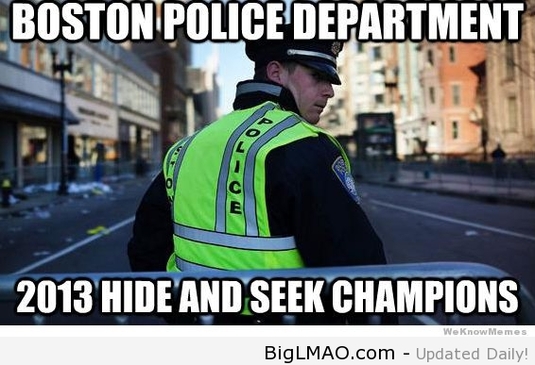
BPD barrier
Even though I read Lover Revealed quite a while ago, Butch’s story was among my Black Dagger favorites and this is partly because of the Boston connection.  So there it is… I’ve been completely stalled and distracted, like everyone else who lives in the Boston area, and pretty much haven’t even thought about my new blog for over a week, since before marathon Monday and school vacation week.  When I did think about getting back to the blog, it was with avoidance,  because I knew this was the post I’d find.  Ugh.  I can’t finish it now, and I’m not sure I should post it at all, even with these fragmentary musings.
69058_502345496486795_1485821568_n
I have noticed the term badass all over the place in mainstream coverage and tweeting about the cops in Boston and Watertown.  I can’t tell if I am just noticing it more, or if it is actually being used more. For example, this from a list of media moments compiled by Boston.com’s Radio BDC blog:
IF YOU WERE LISTENING TO THE SCANNER, THIS WILL NOT BE NEWS: WATERTOWN POLICE OFFICERS ARE TOTALLY BADASS.  While waiting for backup, a single Watertown police officer engaged in a shootout with the suspects early Friday morning — and employed a tactic straight out of a Die Hard movie, according to Watertown police chief Edward Deveau. The officer put his car in gear and jumped out of it, hoping they would think he was still in it as he fired from behind a tree, Deveau said.
We tell kids to “look for the helpers” when we’re forced to talk with them about violent and scary events in the news.  I think some of us grown-ups can’t help looking for badass heroes, in much the same way.
25ac2013-hide-and-seek-champions-thumb-535x365-100787
It’s interesting how quickly social media has provided the means for romanticizing key figures in the drama of the last week.  This morning I read this crazy story about how “hot” and badass the Boston FBI head is, based on tweets and other online sources of pop culture buzz.
In case you were buried under a rock, DesLauriers was at the center of the investigation all last week. He stood up at press conferences and said all kinds of badassy stuff, like this: FBI’s DesLauriers ‘We will go to ends of the earth to find those responsible for this despicable crime.”

I was inclined to just ditch my whole post, since it seems pretty cheesy and insensitive to objectify and engage in the “crushing out” on Boston law enforcement in the context of an overwrought fictional world where the Boston cop hero is a vampire.  I have not been directly injured or affected by the terrible events of last week.  I just live here, and my children live here.  The perpetrator is being treated in the hospital where they were born.  Many other strands link us to the places and institutions that have suffered devastating loss and lockdown. For me, Boston Strong is too personal; it’s not just a meme to adopt, analyze and/or deconstruct.   But then I decided to leave the post unfinished and try and make my peace with it by articulating some of this.

I had been especially looking forward to comments on the “poll” question, but now the whole thing just feels completely different.  Real life badass cops chasing and fighting warped evildoers who suddenly — given the scale and grandiose ambition of their actions — resemble nothing so much as Lessers.  Tough to make your peace with that.

Boston Badass

Badass: Brian (Butch) O’Neal, hard-ass Boston cop and long lost descendant of Wrath; re-united with his kin and his kind when he rescues Beth, a female vampire destined to be Queen.

Falls For: Marissa, aristocratic female of impeccable lineage who was not destined to be Queen, but kicks ass in her own right when she takes on the Princeps Council and defeats an attempt to impose misogynist restrictions on female rights and freedoms (the “sehclusion” motion).

Story Recounted By: the incomparable J.R. Ward, in Lover Revealed (2007)

Hangs Out In: V’s lair at the mansion, the ultimate man cave.

Likes:  Schmancy clothes, good Scotch, the Sox .  There are a lot of high end, top shelf brand names in this book.

Dislikes:  Following law enforcement rules when justice is what he’s after; sitting on the sideline when there are Lessers to be Dehstroyed.

Badass Hero Moment: Withstands torture to protect the Brotherhood and its secrets.

To Read Or Not To Read?

Tangentially Related … and Possibly Diverting:  

Pamela Poll:  Boston cops, Boston criminals… there’s a whole sub-genre now of Boston Noir, and it’s not just books.  There are so many great Boston films.  And tv — who can forget Spencer For Hire?!  So…. who are your favorite Boston badasses?

Pennyroyal Preacher Man

Badass (?):  Reverend Adam Sylvaine, brawny yet contemplative Eversea cousin, discovering his vocation, serving the flock of Pennyroyal Green as their vicar while dodging the lustful and marriage-minded pursuits of the entire female population.

Falls For: Eve Duggan, widowed Countess of Wareham, notorious former Covent Garden actress, courtesan, and all-around Scandalous Woman.

Brought to You By: Julie Anne Long, in A Notorious Countess Confesses (2012) (7th in the Pennyroyal Green series)

JAL_coverandtext

Hangs Out In: The pulpit, the vicarage, and a certain bedchamber at Damask Manor.

Likes: Children and old people, sarcastic and scandalous old women in particular.

Dislikes:  Anyone making snide, insinuating comments about Evie’s past.

Badass Hero Moment: When a man of the cloth throws a punch, or offers up five pounds he doesn’t have, you know it’s meaningful.  Fortunately, he’s also forceful and persuasive from the pulpit.  Definitely a winning combination.

Badass Annoying Moment: Makes snide — beyond insinuating — comments about Evie’s past.  (At that point, though, they were both pretty much acting like idiots.)

(too) Frequently Described As: Golden.

Looks Like….?

the-thorn-birds-richard-chamberlain-1

(Richard Chamberlain, The Thorn Birds, 1983)

Ha ha.  JAL has a clever bit of dialogue around the fact that Rev. Sylvaine doesn’t wear a “dress” (a cassock), and he’s (obviously) not a Catholic priest.  He’s really more like a lanky, broad-shouldered country gentleman who happens to have the care of a church and its flock of parishioners rather in place of an estate. Still, the contrast between his outward control and inner lust, along with the inevitable loss of control and explosive sex reminded me of the infamous Father Ralph. Yes, I know Pennyroyal Green is a million miles from the Australian outback and really there’s nothing else similar about these two.  But it made me smile to think about the Thorn Birds!

To Read Or Not To Read?  So. The whole thing about Adam being a vicar really got me thinking, though, about what had to be different about him — from the other Eversea and Redmond males — in order to make him believable as both an alpha hero and a clergyman.  I think both Adam and Evie were just kind of too… something… maybe it’s that they were both too earnest.  It must have been a challenge to write him in such a way that he’d come across as a red-blooded…well… badass like his cousins Colin and Ian.  These two, who we’ve already met and married off in prior books, make regular appearances here, checking up on Adam. It’s as if Long uses them to give Adam some badass glamour by association. I kept trying to figure out if he needed this kind of bucking up, or if he really is just a kind of beta badass, who keeps a low profile but is a force to be reckoned with when pushed to his limit.

What’s more convincing is Adam as a man exploring his calling as a caretaker of souls, even as a somewhat ambivalent sermon-writer and preacher.  His humility as he discovers his gift and his vocation are nicely conveyed.  But combined with the fact that Evie spends almost the entire book doing good works of one kind or another (she visits the parish poor, she makes huge and almost irrevocable sacrifices in order to provide for her own poor relations) there may have been too much humble pie for me.

That’s always part of the problem with a (former) courtesan heroine; there always have to be dire circumstances that forced her to sell herself,  she has to be stoic and/or unapologetic about being a fallen woman, and she has to refuse to “drag down” the hero, before they can arrive at the HEA.

Bottom line — these two could not have made more incompatible career choices, and it just wasn’t quite as sparkling and fun — or even as funny — as the preceding Pennyroyals. I don’t know if I’m going to start giving letter grades, but if I had to, this would be a solid B. Anything from JAL is just so beautifully written and Pennyroyal Green is a place to which one wants to return again and again.

Tangentially Related … and Possibly Diverting:  The setting in quaint PG, with the requisite assortment of odd and earnest villagers, at one point taking turns in a dramatic recitation of 1st Corinthians that is both sweet and ridiculous, also made me think about funny old Dibley.

Romance arrived for our dear Vicar of Dibley in the HILARIOUS episodes where Dawn French lusted after, and landed, smoldering Richard Armitage.  Found this awesome video of Armitage and French romancing and goofing around together. I firmly believe any excuse to watch Richard Armitage should be taken advantage of, so Enjoy!

Pamela Poll:

Who’s your favorite badass sexy preacher man? Can a clergyman be a convincing alpha hero?

Horn of Plenty

Name: Gideon Horn, the Pirate Lord, terror of sea-going aristocrats, Robin Hood-like wealth re-distributor, Utopian visionary.

Falls For:  Miss Sara Willis, righteous prison reformer and champion of female convicts, stepsister of the Earl of Blackmore.

Story Recounted By:  Sabrina Jeffries, in The Pirate Lord (originally published 1998)

pirate lordpirate lord2

Hangs Out In/On: The high seas, aboard the Satyr; an uncharted island in the South Atlantic.

Likes: Flies a horn-y Jolly Roger, yearns for a mother’s love, dreams of a utopian colony, kidnaps a boatload of convict women to get things started.

Dislikes: Anyone with a title.

Badass Hero Moment: Capture of the Defiant.

Badass Annoying Moment: The Atlantis/Utopia concept is so flawed it’s hard to take Gideon’s insistence on the kidnapping and forced marriages seriously.

(too) Frequently Described As: Thunderous. Taut.

Might Look Like:  wallpapers-pirates-caribbean-1024

Not really, but it’s funny to think about.  I’m pretty sure the re-issue cover image is Avon’s attempt at a mash-up of Jack Sparrow-beadazzled style with traditional chiseled chest romance hero.

To Read Or Not To Read?  First and favorite in the Lord trilogy.  Somehow SJ mixes together pirates, convict ships, struggles for survival, and class conflict while keeping the whole thing frothy and fantastical.  Yet in spite of the fact that it lacks grit and substance (even the “mean” convicted prostitute is a pushover for Sara’s good nature, and the pirates are as tame as Disney — think Peter Pan or Pirates of the Caribbean), it works as a setting for Gideon’s and Sara’s character-driven story.  There are very nice secondary romances, and Sara’s determined and ruthless brother the Earl of Blackmore certainly got my attention as the future hero of the next book.

(Possibly) Amusing, Tangentially Related:

Information about St. Helena, the island SJ used as inspiration for the fictional “Atlantis”

Talk Like a Pirate Day (September 19), official site

Pamela Poll:

What is your favorite pirate romance and/or  who is your favorite pirate badass?

London’s Gambling King

Name: Julian Delbraith and/or Roscoe Neville?  A hero by either name, he’s titled and urbane enough to dazzle the ton AND he’s lethal enough — and enlightened enough — to run the only worker-friendly gambling empire in Regency London.  Of course he is.  How could it be otherwise?

tobystephens

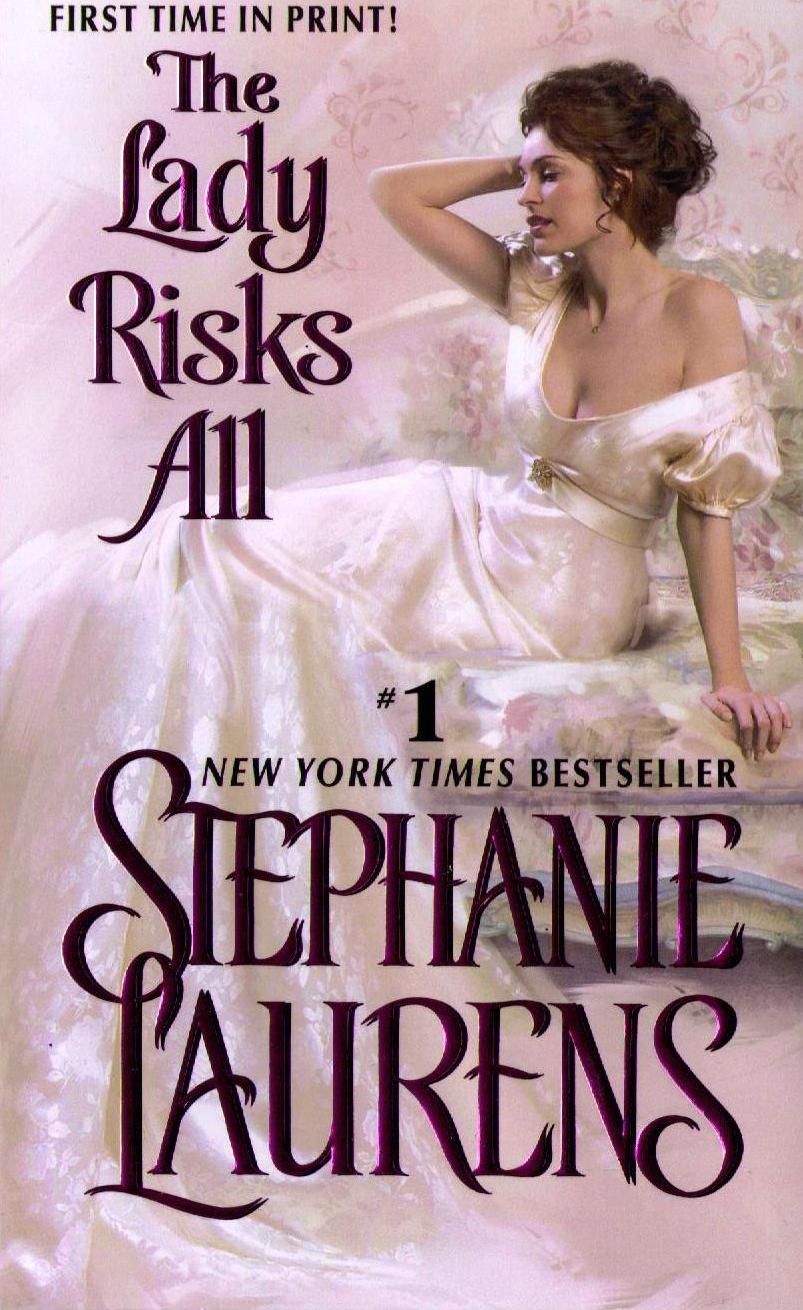
Story Recounted By: Stephanie Laurens, in The Lady Risks All (2012)

Hangs Out In: 1820’s London, dividing his time between Roscoe’s exquisitely appointed townhouse in Pimlico and Ridgeware, Lord Julian’s nephew’s ducal seat and residence of his gaggle of adoring female relatives (along with the teenage duke, Henry).

Likes: Innately noble spinsters of 29 years whose deep passions are ready to burst the bonds of Rigid Respectability; games of chance; giving in to his protective urges; having crime bosses as well as Bastion Club aristocrats for friends; sisters; Cynsters.

Dislikes: Waterloo deserters, kidnappers, having his female friends ignore his directives and follow him to dockside taverns.

Badass Hero Moment: Unreservedly shares his long-kept secret home and family with Miranda and Roderick in their time of need, thereby revealing his aristocratic alter-ego (and simultaneously putting them — especially her — under his direct and explicit protection).

Badass Annoying Moment: TOTAL Dog in the Manger behavior when HE decides Miranda is too respectable and good to associate with notorious and disreputable Roscoe.

(too) Frequently Described As: prowling; panther-like; LGK (London’s gambling king)

Might Look Like:  Toby Stephens (above)  as Rochester in the brilliant 2006 BBC  Jane Eyre …?

TLRAcovermedium

To Read Or Not To Read?  I picked it up largely out of nostalgia.  So many wonderful reads from SL — I read her whole backlist about 6 years ago and still find the prospect of the familiar, cozy, dense, character-driven Cynster-esque tales appealing.  What can I say – I’m loyal! But this one falls far short of the greatness of the early Cynster novels, and even pales in comparison to the Bastion Club books in which Roscoe first appeared (which prior appearances are made much of). It could be me, but where I used to linger and enjoy the pages-long love scenes, I had to skim and skip the purply, generic and repetitive episodes where Roscoe and Miranda fly to heaven’s gate together.  The best thing about this outing is the book’s title, which, for once in a romance novel, cleverly captures both a thematically appropriate gambling reference and foreshadows a central plot element.  Miranda does indeed Risk All, and this book stands apart from most of SL’s oeuvre in that it is she who Decides and then Pursues the alpha hero, and not vice versa.

Tangentially Related … and Possibly Diverting:

Crockford’s Club: How a Fishmonger Built a Gambling Club and Bankrupted the British Aristocracy.”  A hilarious historical tale from the Smithsonian’s Past Imperfect blog.

Pamela Poll: What is your favorite romance where the heroine is the pursuer? Can an alpha hero and alpha heroine co-exist in the same romance?  Leave a comment and tell me what you think!

A-typical-gambling-hell-of-teh-Regency-period-a-place-of-violence-and-vice-500x363

Hungry Like the Wolf

Name: Aidan of Awe, brawny 15th-century Highlander who’s half deamhan (demon?), half immortal Master (savior of Innocence); haunted by his small dead son, he’s a dark, tormented, and merciless warrior feared as the Wolf of Awe.

dark em

Falls For:  Self-described plain and geeky data-whiz Brianna Rose, who has her own paranormal thing going on; as an empath “Brie” is somehow both enthralled with Aidan and brought low by his intense negative emotions.

Story Recounted By: Brenda Joyce, in Dark Embrace, a Masters of Time novel, book one of the Rose Trilogy

Hangs Out In: Cold Scottish castles, packs of wolves, Brianna’s dreams.

Likes:  Lasses with nicknames of French cheese.

Dislikes: Ghosts.

(too) Frequently Described As:   Hot.  We get it, he’s hot.  He would have benefited from a big dose of Showing Not Telling, perhaps via some better dialogue and some perceptible rapport with Brie.

Might Look Like:  I could not get a good mental image of this guy — at least not his face.  As a reader, I find it frustrating, and very telling, when the hero feels so generic to me that I can’t picture a face.  Like the book cover itself, in my mind Aidan was Faceless Bonny Braw Big Shoulder Hero in Kilt.

To Read Or Not To Read?  Too many big questions loomed annoyingly throughout the read.  Why/how is Aidan a shapeshifter, and why a wolf?  Why is this love story so one-sided? (It’s impossible to tell why or how he has feelings for her, but we’re told every couple of pages that she is in love with him).  Why is time travel, and living in centuries not one’s own, so widely practiced and no one is thought odd for wearing designer jeans in medieval Scotland?  I realize this is part of a series, and I mistook the fact that it’s book one of a trilogy, but there are few answers to be had, and apparently any world-building that might have answered at least some of these questions, has happened in an earlier Masters of Time book.  The action and emotion throughout this tale are fever-pitched, yet the real problem is the lack of connection between Aidan and Brianna.  Constant dread, constant lust-think, constant anguish.

Tangentially Related … and Possibly Diverting:  This song just kept popping into my head as I was reading!

Pamela Poll: Do you ever find yourself associating a song with a book as you’re reading it, almost like a mental soundtrack (with or without the accompanying mental image)?  Leave a comment and tell me about it!