Never Say Die: Speaking Up for Badass Regencies

I have to say I am loving all this talk about historical romance over the past couple of weeks. Last week I tossed around my own musings on the provocative yet substantive discussion launched by the influential All About Romance and Dear Author blogs. This week finds historical romance “troubles” cropping up again at Risky Regencies, which I think is great.  Sick of the Regency? Well maybe, but….

Sharpe-sean-bean-22356711-885-1280

As many have pointed out, readers have had a decades-long love affair with Regency-set historical romance for good reason, and if there is a real or perceived Regency Fatigue among readers, the candid discussion we’ve all been having stems mainly from deeply rooted affection for this Heyer- and Austen-inspired world. In re-examining my own sentiments this week, I realized I’m probably slightly ambivalent.  I’ve confessed to suffering a mild disenchantment with Regencies that feel too wall-paperish or insubstantial.  I do actively hunt out historicals with settings based on American history, and the erstwhile art historian in me still wishes there were more badass romances set in southern Europe during the Renaissance (and not yet another Tudor- or Borgia-inspired historical novel with romantic elements).
PDVD_415But I’ve read hundreds, probably thousands, of Regencies, and there are so many on my DIK shelf that it’s overflowing. Also, there really are badass Regency heroes /heroines who aren’t dukes, earls, or even the slightest bit aristocratic — through they’re frequently noble, in the best sense of the word. There’s an element of truth in the suggestion that some Regencies offer a fairytale version of England which is devoid of politics, or gritty social and economic realities.  sharpeBut it’s equally true that some Regencies offer well-researched military and/or social history, plots that center on wartime or post-war conflict, and even themes of class conflict, industrialization, domestic violence, and addiction — though I don’t claim to know how Regencies that touch on these darker themes stack up to their frothier siblings in terms of sales figures.

I thought it would be fun to take a few manic Monday minutes to list a few of my all-time favorite Badass Regencies.  If there’s a thread running through this list, it’s my love for intricately connected books, especially a series structured around a plausible group of badass heroes. I am probably repeating something I’ve said elsewhere, but I am drawn to fiction that explores themes like loyalty, honor, kinship, friendship, bravery, and family. Romances against such a backdrop are especially powerful, and it’s a big part of my devotion to historicals.

kinopoisk.ruI’m also a sucker for the band of brothers trope, if it’s done well, with careful and well-researched world-building. Hell, even if it’s a barely plausible Saving England From the Forces of Evil Secret Spy Ring, if it has compelling characters, a strong story and finely honed dialogue, I’m willing to suspend disbelief.

What are your favorite Really Good Regencies??  Today’s list is heavily weighted towards uber alphas, with a lot of war heroes and spies.  I haven’t even mentioned Loretta Chase once yet (!). I’ll return at some point to come up with my list of top badass Regencies where the heroes fight their battles in ballrooms, drawing rooms, and gaming hells, and there are plenty I still haven’t yet read, so please help me out and let me know who you’d add!

Badass Regencies That Won’t. Back. Down

Joanna Bourne, the Spymaster series / Darkly exquisite; French and English spies from all rungs of the social ladder. Words fail me.  If anything, these books just keep getting better and better.  The heroines are as badass as the heroes. Adrian’s story (The Black Hawk) was one of the best books I read in 2012.

Stephanie Laurens, the early Cynster books / Lush and nostalgic; curiously addictive. This family operates like a clan of badass white knights, reminding me both of Scottish medievals and, oddly, of “fixers” like Olivia Pope and her band of gladiators in suits.

Jo Beverley, the Company of Rogues series / Richly satisfying; wonderful secondary characters and friendships; some middle class protagonists. This series is wonderful and only suffers the tiniest bit from probably being constantly compared to the (Georgian-set) Malloren series.

Laurel McKee, Daughters of Erin series / Fiery and pretty political; there are riots and revolutionaries. Broadly speaking, these qualify as Regency-era historicals, but set in Ireland during and following the 1798 rebellion. I loved the theme of SISTERhood in this series, and the history is woven in seamlessly.

Gaelen Foley, Knight Miscellany/ A duke, twin heroes of the Peninsular Wars and their other siblings; these books explore sibling rivalry quite intensely, and the war-damaged brothers are heart-stoppingly enigmatic and tormented.

Eileen Dreyer, Drake’s Rakes series / A genuine band of brothers series; they fought and barely survived Waterloo together. The journey home is fraught with perils like amnesia, mistaken identity, deception, treason, abandonment and a disgraced wife.  The depiction of military life, especially the officer’s wives/daughters who traveled with the army made Never a Gentleman my favorite.  This series also reminded me so strongly of Bernard Cornwell’s legendary hero Richard Sharpe, that some of the glory of Sharpe’s Rifles may have rubbed off on Drake’s Rakes.

seanbean

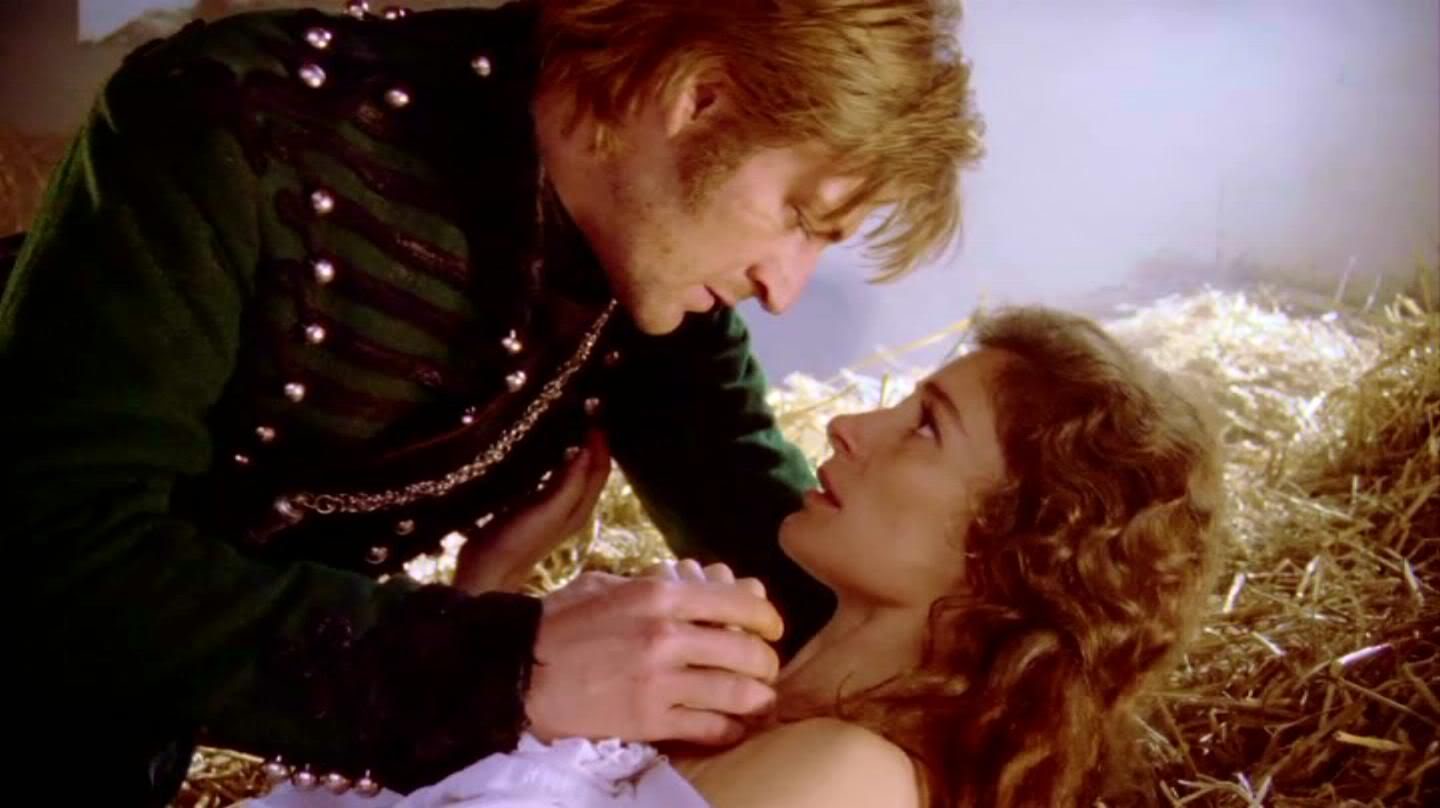
Sean Bean as Richard Sharpe, a particular favorite Regency badass who fought his way to being an officer but never a gentleman, before he got involved with Lords or Rings or playing the Game of Thrones.

Widow and Orphan: What Jane Eyre and Julia Grey Have In Common

I am a latecomer to the novels of Deanna Raybourn.  She has a new release set in colonial Africa out just last week, but just last night I finished Silent in the Grave (2007), which is the first Lady Julia Grey book, a Victorian-set mystery. 6933131

Being compulsive about sequels, I’ve already begun Silent in the Sanctuary (2008), which is the second book in which Julia will — it appears — solve a tangled mystery in the smoldering and rather mysterious company of investigator Nicholas Brisbane.

Charlotte Bronte, on the other hand, has been in my life since my early teens. I’ve posted recently about the enormous influence of Jane Eyre on my tastes and preferences as a reader, as part of explaining (for myself, mainly, and also for anyone else who’ll listen) why the hell I decided to start this blog.  🙂  Jane is a key figure in my literary back story – why I love reading, why I love romance and history and moody gothic tales, why in spite of knowing the absolute opposite is true, I still sort of think being a governess sounds romantic….

I didn’t expect Jane to keep cropping up all over the place this week, but it’s been a week of Big Thoughts about romance and history, and my bedtime reading has put me in a shadowy Jane Eyre mood.  Silent in the Grave is a Harlequin MIRA romantic mystery, so not a traditional HEA romance, but it’s honestly the most achingly romantic book I’ve read in a while.

At the center is an attraction compulsion that provokes me like Jane and Rochester with its subtle complexity and oblique intensity.  Julia and Nicholas positively spark and flare, generating heat without sex scenes, just by being in a room, circling each other, worrying about each other, vaguely threatening each other.

bbc2006

I realize I am not the first to see Bronte resonances here.  There’s the incredibly tangible atmosphere of a gaslit Victorian England, from the overstuffed privilege of a fashionable family home to the grim surroundings of the expendable classes (prostitutes, orphans). Yes, I know it’s 1886, and Jane Eyre was published in 1847, but I’m talking about a mood here, people.  I can’t wait to get to the third book, where they’ll head north to the moors and I can picture them, windswept and wild, stalking each other until they finally succumb to the lust!

Jane Eyre 2007Because of course the most resonant thing about this book is the relationship itself, and the way Julia and Nicholas interact.  This above all is what puts me in mind of Jane and Rochester.  It’s something about the way they inadvertently both madden and seduce one another, with intellect and conversation and a hands-off but incredibly latent and irresistible sensual appreciation for each other’s physical presence and appearance.

Of course what’s totally different for Julia is that she is in fact a widow, and not an orphan.  Her very involved and encouraging family are another delightful aspect of this book, though even without them, this heroine enjoys a much less precarious position in Victorian society than poor long-suffering Jane.  As MacPudel so astutely pointed out in a Comment on the Historical Romance brouhaha this week, heroines who are believably in a position — economically and socially — to make their own relationship choices — in a historically accurate historical novel — are hard to find.

jane_2006_4_465x310I always thought of Jane as unrelentingly strong-willed, and from the start I loved how she made herself Rochester’s equal in intellect and conversation, but when push comes to shove, her existence as a single woman of no family is dangerously marginal and fraught with peril.  When she does make her own choices, her independence comes at a huge price. But Julia has the means to be independent, or at least as independent as was possible for a young widow with a fond father to be.  Not only does she not serve Nicholas as member of his domestic staff, but she has actually sought his services as an investigator and has a higher social status.

So it would seem Julia and Jane really don’t have very much in common at all.

tobystephens

Except for the romance.  The intense fixation on a charismatic, brooding and tormented hero who himself is unable to tear himself away from watching and waiting for the woman who challenges and fascinates him.

Bottom line — if there’s anyone reading this who hasn’t already read the Lady Julia Grey series, I’m going out on a limb to highly recommend after only one book.  And I just can’t stop thinking about the ways this book is getting under my skin because of its smoky Jane Eyre echoes. Reader, find. A. Copy.

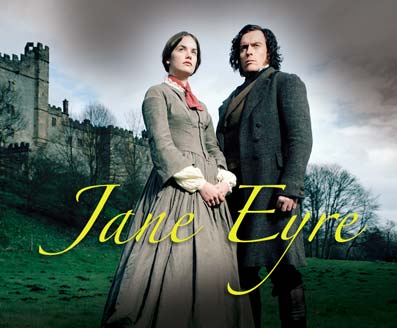
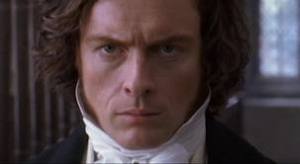
Fellow Jane fans will likely notice I’ve only used pics from the 2007 BBC production with Toby Stephens and Ruth Wilson.  I know claiming a “best” adaptation is controversial, but in my mind this is absolutely it.  Love love love the sizzling chemistry between these two – it was the first film adaptation where I actually felt the heat, and where Rochester was both unappealingly beastly and astonishingly gorgeous in a way that made sense to me.  

So what about you? Which is your favorite Eyre?  And for those who are ahead of me on this, and have read the Silent series, what do you think?  Are Julia and Nicholas as epic as Jane and Rochester?  

Historical Romance – Lament, or Let it Die?

As a new blogger, an important piece of my learning curve is keeping up with the buzz on Twitter and on established romance and book blogs, and participating in discussions in order to exchange ideas and get to know some other bloggers.  I’m posting here at “home” now because there’s so much interesting content about this topic, and my own musings are growing too lengthy for commenting on other pages.

books1

For about a week I’ve been following a wide-ranging discussion about historical romance that’s happening on several of the major romance blogs.  (And before I go further, let me just say to my currently quite petite band of Badass Romance followers — if you haven’t checked out the blogs at All About Romance and Dear Author, you are really missing out on the best the romance community has to offer in the way of cross-cutting dialogue and commentary about everything from book covers to publishing trends to literary criticism, along with INDISPENSABLE book reviews.)

Lynn at All About Romance asked Where Have All the Historical Romances Gone?  Since the intersection of history and romance fiction is my personal reading sweet spot, this caught my attention right away, and I jumped in to comment, along with a host of other readers and — this is one of the (many) super cool things about AAR — a bunch of historical romance authors, including the actual people who are actually responsible for some of my favorite recent reads in this genre. (!!!) A squee!! moment — ok, and here I am just trying out this term frequently employed in romance bloglandia for when you sort of interact with an author and get all “fangirl” about it….

7756458So I don’t mind if you skip the rest of this post — if you are looking for an actual good new book to read, go right now and find yourself a copy of Libertine’s Kiss, by Judith James. A non-Regency historical romance that is not to be missed.  I have been meaning to make a review post about this book for weeks! A Restoration tale, it earned DIK status at All About Romance, and features one of my favorite romance tropes: second chance at love.

OK, back to the Big Picture.  Anyway, this week I also started more actively following some of these folks on Twitter.  So that’s how I “met”  Evangeline Holland,  an author of historical romance who also blogs about Edwardian history. Her post offered another angle on The Trouble With Historical Romance, and another blogspace to talk about this with, again, readers as well as writers.

Over at Dear Author, this morning Jane says We should let the historical genre die. Which is a bold statement, but I realize I agree with what she’s saying.  Or at least with what I think she might be saying.  Can I just say that I agree with my own interpretation of this bold post?  How ridiculous, but here is what I want to say:  although I have been commenting in a very lamentatious fashion on many of the blog posts this week, I realize that the books I have been feeling nostalgic about are mostly NOT the current crop of historical romances, which, as everyone has noted, are almost exclusively set in the British Isles of the 19th century (or feature expatriate English lords of that era who may find themselves elsewhere on the globe but for all intents and purposes are Regency or Victorian characters).

It’s not that I haven’t enjoyed recent books from Liz Carlyle, Elizabeth Hoyt, Julie Anne Long, Tessa Dare, Anne Stuart, Anne Gracie, Jennifer Ashley, Meredith Duran, and at least a dozen others.   And there are standouts like Joanna Bourne’s exquisite Spymaster novels.  But what really got me feeling nostalgic about historical romance was thinking about great reads from a decade or two ago — an early Loretta Chase book like The Lion’s Daughter or Mr. Impossible, my first time reading Anya Seton’s Katherine, or a favorite “old school” historical like Elizabeth Lowell’s ONLY series. Why are there so many middling books about Regency lords, while it’s truly hard to find a gem like The Black Hawk, about a thief from St. Giles turned spy for the crown?  I’ve also really liked Pamela Clare’s MacKinnon’s Rangers trilogy, at least in part because of the alternate setting that appeals to my love for colonial American history — but, again, it’s hard to find a lot of books that do romance well in this setting.

Which I guess leaves me agreeing that if historical romance continues to occupy such a incredibly narrow band of history, a fairytale version of England overpopulated with aristocrats, I’m OK with the declining sales.  Jane/Dear Author is probably right that the genre needs to reinvent itself.  Why do we keep reading and buying books about the ton, and then complain about there not being enough historical accuracy, or variety?  Many readers in the AAR discussion suggested reading backlists and newly available e-books from the ’90s and earlier. Romantic Historical Fiction defines itself as a distinct genre these days, and I wonder if that’s another place readers are going…? And I suspect many historical romance readers are also quite happily reading newer titles in erotic, m/m and/or paranormal romance, particularly those well-crafted novels that also feature fundamental themes of honor, loyalty, kinship, defiance, courtliness, and characters who battle the odds to end up on the right side of history.

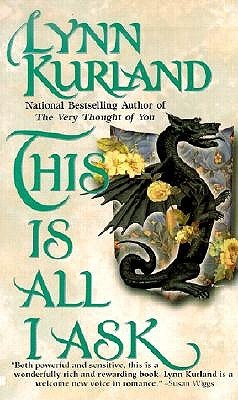
It may sound odd, but beneath surface trappings of daggers vs. claymores, sizzling sex scenes vs.  stopping at the bedroom door, the badasses of J.R.Ward’s Black Dagger Brothers and Lynn Kurland’s medieval De Piagets and MacLeods have a lot in common.  And it’s these underlying heroic tropes – a lethal combination of boldness, badassery, vulnerability, flaws, charm, and wit – that I respond to as a reader.50718

So perhaps historical romance as it’s currently being published is reaching an ebb that’s organic, cyclical, and necessary. Maybe it’s time to lament, but move on. What do you think? What is your most recent historical romance read? Or have you been reading something else entirely?

———

Other links –

This topic has been taken up on many individual blogs, and in several review posts this week, too.  I’m including links here for several interesting posts that turned up in my recent reading, but this is by no means comprehensive.

Courtney Milan, Digital Strategy in Historical Romance (author, 19thc historicals)

Elise Cyr, Why Historical Romance? (author, medieval romance)

Dear Author’s  Review of Jack Absolute.  (Interesting discussion in the Comments here, about romance readers reading more straight historical fiction as we search out more interesting settings.)

Please Do Not Touch

FORBIDDEN….. About Touching Things You’re Not Supposed To, and When Heroes are Better in Someone Else’s Story

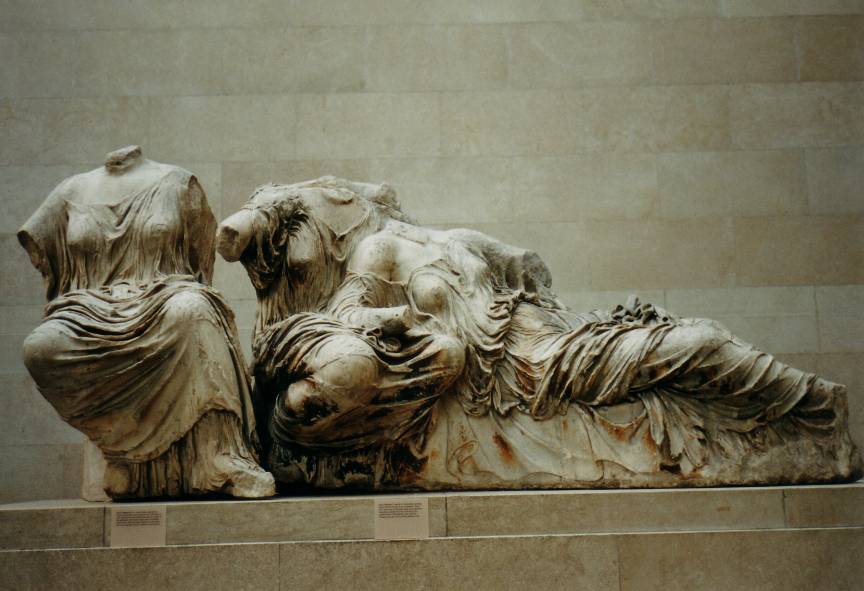
Elgin Marbles

Name:  Jordan Willis, auburn-haired Earl of Blackmore; by day he crusades for social reforms in Parliament, by night he’s busy winning the affections of the bored wives and widows of the ton.

Falls For: Prim yet proper rector’s daughter Miss Emily Fairchild, blackmailed into posing as wild Scottish debutante Lady Emma Campbell.

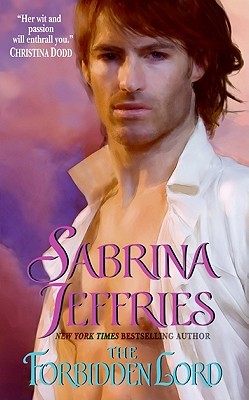
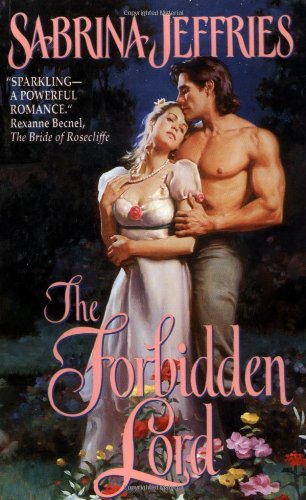
forbidden lordStory Recounted By:  Sabrina Jeffries, in The Forbidden Lord (1999)

Hangs Out In: Parliament, the British Museum, clubs, the opera (London 1819)

Likes: merry “uncomplicated” widows, social reform, his militant sister Sara.

Dislikes: falling in love (but he does fall in the end, and there’s quite a lot of heat along the way!)

Badass Hero Moment: Arranges sizzling hands-on private encounter with the Elgin Marbles, newly displayed at the British Museum.  “I’m a trustee of the museum…”

Badass Annoying Moment: Insists throughout that he doesn’t believe in love, that his heart remains untouchable and his desire for our heroine is purely physical, yet proves his emotions are deeply involved — and confused — when he’s all too willing to believe the worst of her.

(too) Frequently Described As: Controlled.

Might Look Like:  Rupert Penry-Jones as Captain Wentworth in the 2007 PBS Persuasion.. ?

capt wentworth

To Read Or Not To Read?  This is the middle book in the Lord trilogy, and, like the other two, it’s a bit of a romp, with occasional interludes of character development revealing painful histories and inner emotions.  A fun read largely because SJ does such a good job building the ever-intensifying sexual attraction between Jordan and Em(ma)ily. There are evil, scheming relatives and unsuitable suitors all over the place getting in the way of the HEA, but there is connection and chemistry to get them past these obstacles. Usually false identity “uncanny double” storylines are irritating because you can’t believe the hero/ine doesn’t realize the deception sooner, but in this case we get that out of the way quickly, which is a relief.  Blackmore is nothing if not keenly observant when it comes to women.

The odd thing is that I think I found Jordan more compelling, and even more sexy, as Sara’s ruthless brother in Book 1 of the Trilogy than in his own book, where his edge seems blunted by the plot device that drives the central conflict — his insistence that he doesn’t “believe in love” just comes off as annoying and repetitive.forbidden

This trilogy from a decade or so ago was reissued by Avon and I think if Steamy Regency is your thing, this fits the bill quite nicely. Lord’s sake, I could not stop reading in spite of it being neither the steamiest, nor the funniest, of its ilk!  (And I’m not sure why, but I think in this case I actually like the old cover better…)

elgin_marblesTangentially Related … and Possibly Diverting:

Arrival, Exhibition and Early Reception of the Elgin Marbles in London, from APOLLO.

These iconic fragments of classical Greek sculpture were removed from the Parthenon in Athens in the 1790’s and brought to London. Controversy over this looting/appropriation/rescue (you decide) raged even then, and they were not displayed publicly until after 1816, but they remain in London today and the controversy over where they belong continues.  It could just be the erstwhile art historian in me, but the scene in the Museum where they’re alone together with their hands all over the freaking Elgin Marbles really got my attention. All that forbidden touching!!

Pamela Poll:  Who are your favorite secondary character heroes? Have you ever been disappointed when they seemed less Badass in their own book?

BONUS QUESTION:  Have you ever touched something in a museum that was off-limits?

Horn of Plenty

Name: Gideon Horn, the Pirate Lord, terror of sea-going aristocrats, Robin Hood-like wealth re-distributor, Utopian visionary.

Falls For:  Miss Sara Willis, righteous prison reformer and champion of female convicts, stepsister of the Earl of Blackmore.

Story Recounted By:  Sabrina Jeffries, in The Pirate Lord (originally published 1998)

pirate lordpirate lord2

Hangs Out In/On: The high seas, aboard the Satyr; an uncharted island in the South Atlantic.

Likes: Flies a horn-y Jolly Roger, yearns for a mother’s love, dreams of a utopian colony, kidnaps a boatload of convict women to get things started.

Dislikes: Anyone with a title.

Badass Hero Moment: Capture of the Defiant.

Badass Annoying Moment: The Atlantis/Utopia concept is so flawed it’s hard to take Gideon’s insistence on the kidnapping and forced marriages seriously.

(too) Frequently Described As: Thunderous. Taut.

Might Look Like:  wallpapers-pirates-caribbean-1024

Not really, but it’s funny to think about.  I’m pretty sure the re-issue cover image is Avon’s attempt at a mash-up of Jack Sparrow-beadazzled style with traditional chiseled chest romance hero.

To Read Or Not To Read?  First and favorite in the Lord trilogy.  Somehow SJ mixes together pirates, convict ships, struggles for survival, and class conflict while keeping the whole thing frothy and fantastical.  Yet in spite of the fact that it lacks grit and substance (even the “mean” convicted prostitute is a pushover for Sara’s good nature, and the pirates are as tame as Disney — think Peter Pan or Pirates of the Caribbean), it works as a setting for Gideon’s and Sara’s character-driven story.  There are very nice secondary romances, and Sara’s determined and ruthless brother the Earl of Blackmore certainly got my attention as the future hero of the next book.

(Possibly) Amusing, Tangentially Related:

Information about St. Helena, the island SJ used as inspiration for the fictional “Atlantis”

Talk Like a Pirate Day (September 19), official site

Pamela Poll:

What is your favorite pirate romance and/or  who is your favorite pirate badass?